If you’ve ever stood in a biotech lab, a food and beverage processing plant, or a wastewater treatment facility, chances are you’ve heard the terms “dead-end filtration” and “tangential flow filtration” tossed around like they’re interchangeable. As a supplier of tangential flow filtration systems, I’ve lost count of how many times I’ve sat across from a plant manager or a lab scientist who mixed these two up—especially when they’re trying to pick the right system for a product that’s finicky, sensitive to contamination, or needs to hold up over a long run. Let me break this down, straight from the years of talking to people who actually use these systems, not just reading textbooks. Tangential Flow Filtration System
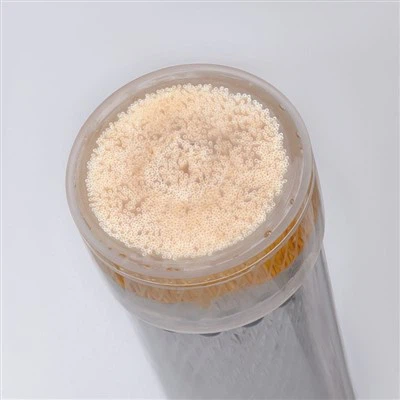
First, let’s get one thing straight: both dead-end and tangential flow filtration are pressure-driven separation processes. That’s the basic science. You use pressure to push a liquid (called the feed) through a filter, and you separate out unwanted stuff—whether that’s cell debris in a monoclonal antibody sample, sediment in apple juice, or solid waste in municipal water. Where they differ is in how that liquid flows relative to the filter, and that difference makes or breaks performance for most applications.
Let’s start with dead-end filtration, because it’s the simpler, more old-school method. If you’ve ever poured coffee through a paper filter in a drip brewer, you’ve done dead-end filtration. The entire feed liquid flows straight down, perpendicular to the surface of the filter. All the solids, gunk, crud—whatever you’re trying to remove—gets trapped on that top surface of the filter, building up a cake layer the longer you run. That sounds fine, right? For small batches, or when you don’t need to process a lot of volume, it works. But push it too far, and you hit a wall. As that cake layer thickens, it acts like an extra filter itself. The pressure you’re applying has to work harder to push liquid through all that stuff, so flow rates slow way down. Eventually, the filter clogs completely, and you have to stop, yank it out, throw it away, and start over with a new one. I’ve seen a lab tech spend half their morning changing dead-end filters for a 10-liter sample of E. coli culture, just because the clogging was so bad. It’s messy, it’s labor-intensive, and it’s a total bottleneck for anything that needs high throughput.
Now, tangential flow filtration (TFF)—this is where things get interesting, and where most people start to see why it’s become the workhorse for so many industries. The key difference here is the flow direction. Instead of the feed liquid flowing straight into the filter, it flows parallel to the filter surface, tangentially, like a river moving along the banks instead of plunging straight through them. As the liquid flows along, a small portion of it—called the permeate—gets pushed through the filter, leaving the solids, larger molecules, or whatever you’re trying to separate behind in the remaining liquid, called the retentate. But here’s the big trick: that tangential flow isn’t just there to move liquid along. It creates a shear force, a kind of friction along the filter surface, that scrapes away most of the gunk that would otherwise build up as a clog. Instead of a thick, dense cake layer forming on top of the filter, you get a thin, mostly reversible layer that doesn’t shut down flow. That means TFF can run for hours, even days, without needing to stop and replace filters. It’s like the difference between trying to pour a bucket of mud through a fine sieve, and holding that sieve under a running hose while stirring it gently—only the clear water comes through, and the mud doesn’t clog the holes.
I know what you’re thinking: if TFF is so great, why does anyone use dead-end filtration? For small, low-volume applications, dead-end is cheaper, simpler to set up, and requires less training. If you’re filtering 100 milliliters of a lab sample once a month, you don’t need a big, expensive TFF system. Dead-end works fine. But for anything that needs to scale, from a biotech manufacturing plant making hundreds of liters of antibody drug every week, to a juice processor pumping out thousands of liters of apple cider, to a pharmaceutical company purifying proteins for clinical trials, dead-end just doesn’t cut it. The throughput is too low, the labor cost is too high, and the risk of contamination from changing filters constantly is a real problem. I once worked with a biotech startup that was using dead-end filtration for their small-batch vaccine production. They had to replace filters every two hours, which meant they were exposing their product to more chance of error, and they were wasting 30% of their feed material just from having to discard partially clogged filters. Switching to a small TFF system cut their processing time by 70% and reduced material waste by more than half.
Let’s get into the nitty-gritty of performance differences, because that’s what actually matters to people buying these systems. First, throughput. TFF consistently has higher flow rates over time, because the shear force prevents clogging. Dead-end flow rates drop exponentially as the cake layer builds up. I’ve seen a dead-end filter that started at 100 liters per hour drop to 10 liters per hour after just 30 minutes of use. A TFF system on that same feed might hold steady at 90 liters per hour for 10 hours straight. That’s a huge difference in how much product you can get done in a day.
Then there’s retention. Both systems can separate solids or molecules based on size, but TFF does a much better job of retaining the target material without trapping it unnecessarily. Because the tangential flow keeps the filter surface clear, you don’t get a lot of unintended adsorption—where your valuable product sticks to the filter material. I’ve heard horror stories from food manufacturers who used dead-end filtration for fruit juice, only to have their expensive flavor compounds get trapped in the cake layer on the filter. With TFF, those compounds stay in the liquid stream, because the shear force keeps them from getting pushed into the filter. That means higher yield, less waste of your product, which directly translates to lower costs.
Cleaning and reuse is another big one. Dead-end filters are almost always disposable, right? Once they clog, you throw them away. That’s a huge expense for large-scale operations. A 1-square-meter dead-end filter can cost hundreds of dollars, and if you change it 10 times a day, that’s thousands of dollars a day in filter costs. TFF systems, on the other hand, use reusable membranes. You can clean them in place, using a combination of water, caustic solutions, or even sanitizers, and they’ll work almost as well as new, run after run. I’ve worked with a wastewater treatment plant that switched from dead-end to TFF and cut their membrane-related costs by 80% in the first year. They only had to replace their TFF membranes every 2-3 years, instead of buying new dead-end filters every few weeks.
But wait—TFF isn’t perfect, and I’d be lying if I said there are no trade-offs. TFF systems are more complex. They require pumps, controls, and regular maintenance, whereas dead-end setups are just a filter and a flask, maybe a small vacuum pump. The initial cost of a TFF system is higher too. For a small lab that only needs to process 10 liters a month, that extra cost might not be worth it. But as volume increases, the savings from labor, waste, and filter replacement add up fast. I always tell customers to ask themselves: how much do I process, how often, and what’s the value of my product? If it’s a high-volume, high-value product, TFF is almost always the better long-term investment.
Another thing I hear a lot is that people worry about product degradation with TFF. Because the feed is moving at high shear, they think that might damage sensitive molecules like proteins or cell cultures. That’s a valid concern, but modern TFF systems are designed to minimize that. You can adjust the tangential flow rate, the pressure, and the shear force to match your product. For fragile samples like therapeutic antibodies, we use low-shear TFF membranes and flow rates that keep shear force to a minimum, while still preventing clogging. I once worked with a gene therapy company that was worried their viral vectors would get damaged by TFF shear. We customized a small TFF system with a flat-sheet membrane and a low-flow pump, and they were able to process their entire batch without losing any viral titer.
Let’s also talk about applications, because that’s where the rubber meets the road. Dead-end filtration is used for things like clarifying small beer batches, filtering lab reagents, or removing sediment from small water samples. It’s for low-volume, one-off jobs. TFF is used for everything from biopharmaceutical manufacturing (antibodies, vaccines, gene therapies) to food and beverage (juice clarification, wine stabilization, dairy protein concentration) to environmental remediation (wastewater treatment, oil and gas produced water processing) to industrial chemicals (polymer concentration, water purification for electronics). If you’re producing anything that needs to be consistent, scalable, and cost-effective, TFF is the go-to.
I don’t want to make it sound like dead-end is obsolete. It has its place, and it’s a great option for certain use cases. But when people ask me which is better, my answer is always: it depends on your volume, your product value, and your throughput needs. But if you’re processing anything beyond small, occasional batches, TFF is almost always the smarter choice.
As a supplier of TFF systems, I’ve seen too many teams waste time, money, and product by sticking with dead-end because they don’t understand the difference. I’ve helped biotech startups scale from lab-scale to full manufacturing using TFF, I’ve helped food processors reduce waste by 50% switching from dead-end, and I’ve helped wastewater plants cut their operational costs dramatically. The key is understanding how each process works, and matching it to your specific needs.
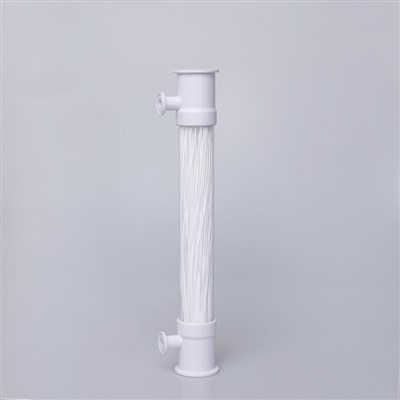
If you’re tired of dealing with clogged filters, high labor costs, low throughput, and wasted product from dead-end filtration, let’s talk. We work with teams across every industry to design and customize TFF systems that fit their exact volume, product, and budget needs. Whether you’re a small lab looking to upgrade to pilot-scale, or a large manufacturing facility needing a full-scale TFF setup, we can help. There’s no one-size-fits-all solution, but when it comes to scalable, cost-effective filtration, tangential flow is the future. Let’s connect to discuss how we can streamline your filtration process and boost your productivity.
Tangential Flow Filtration System References
- Geibel, J., & Naik, P. (2018). Tangential flow filtration: principles and applications in biopharmaceutical manufacturing. Journal of Membrane Science, 555, 234-247.
- Cheryan, M. (1998). Ultrafiltration and microfiltration handbook. CRC Press.
- Van Reis, R., & Zydney, A. (2007). Tangential flow filtration for protein purification. Biotechnology and Bioengineering, 97(1), 10-26.
- Mulder, M. (1996). Basic principles of membrane technology. Springer.
Hangzhou Guidling Technology Co., Ltd.
As one of the leading tangential flow filtration system manufacturers and suppliers in China, we also support customized service. We warmly welcome you to wholesale high quality tangential flow filtration system in stock here from our factory. For quotation, contact us now.
Address: No.795, 18th Street, Qiantang New District, Hangzhou City, Zhejiang Province, China
E-mail: export1@guidling.net
WebSite: https://www.guidlingfiltration.com/
