Hey guys, if you’ve ever looked into marine power systems lately, you’ve probably heard that marine lithium batteries are the way to go—no more gassing over lead-acid dead weights, way longer runs, and way less hassle. But here’s the thing I get asked every single day: “How do the prices actually shift when capacity goes up? Is it linear? Or does a 100Ah battery cost way more than two 50Ah ones?” As a marine lithium battery supplier who’s talked to everyone from weekend anglers upgrading their small tinnies to charter captains outfitting 50ft yachts, I get it—capacity isn’t just a number on a spec sheet; it’s the difference between making it back to the dock at the end of the day or bobbing around waiting for a tow. Let’s break this down like we chat at the marina, no jargon, just real stuff we deal with every week. Marine Lithium Battery

First, let’s get one basic term out of the way so we’re all on the same page: capacity here is measured in amp-hours (Ah) at the 20-hour rate, that’s the industry standard for marine use. So a 50Ah battery delivers 2.5 amps over 20 hours, a 100Ah delivers 5 amps over 20 hours, etc. Capacity is how much energy your battery can store, right? That’s the foundation of everything else. Now, when you’re looking at marine lithiums vs. old lead-acid, most folks know lithium is denser—more energy in less space—but the price jump when you up capacity? It doesn’t work like buying 10 gallons of gas for $50 vs. 5 gallons for $25. There’s a whole science (and a little math) behind why that works, plus some hidden factors that sneak up even seasoned boaters.
Let’s start with the core cost drivers that shift with capacity, because that’s where the price variation starts. First up is the cells themselves—those are the little blocks that hold the energy, and they’re not all created equal. For small batteries, like the 12V 50Ah units that go in jon boats or bass boats, we use 18650 or 21700 lithium cells, same kind you’d find in a power tool or an e-bike. Those small cells are cheaper per unit when you buy a lot, so scaling a small battery is fairly linear: a 50Ah 12V is around $350, a 100Ah 12V is around $600. That’s a pretty straight jump, like $250 for double the capacity. But when you go bigger—say, 200Ah, 300Ah, or even 1000Ah for a big cruiser or commercial vessel—we switch to larger prismatic or pouch cells, and the pricing starts to shift. Why? Because those big cells have different manufacturing economies of scale. Making a 300Ah cell isn’t just three 100Ah cells glued together; it’s a whole different production line, with lower per-cell costs once you hit that size. Wait, so does that mean bigger is cheaper per Ah? Kinda, but not for everyone.
Wait, hold up—don’t get ahead of yourself. That’s only if you’re buying full systems, not just individual batteries. Because marine lithium batteries aren’t just cells; they have a battery management system (BMS) that keeps them safe, a casing that’s corrosion-resistant for saltwater, wiring, terminals, and a little electronics that make sure all the cells talk to each other. Those overhead costs don’t change when you scale capacity. A 50Ah battery has a BMS, a casing, and terminals, same as a 1000Ah battery. So if you divide the total cost by Ah, the fixed overhead gets spread out more on big batteries. Let’s do quick numbers—our 12V line: 50Ah is $350, so $7 per Ah; 100Ah is $600, so $6 per Ah; 200Ah is $1100, so $5.5 per Ah. Yeah, that adds up. But here’s the catch: that only works if you’re buying from a reputable supplier, not a random eBay listing with “100Ah marine lithium” that’s actually a 50Ah with a fake label. We’ve seen that stuff—angels buy them, bring them back fried because the BMS is garbage. So real cost per Ah drops as capacity goes up, but that’s only when you’re dealing with quality gear.
Another big factor that most boater don’t think about: voltage. Marine batteries are usually 12V, 24V, 36V, or 48V, depending on your boat’s system. If you need a 24V battery, that’s two 12V batteries wired in series, right? So a 24V 100Ah isn’t just twice a 12V 100Ah—it’s two of them, plus you have to make sure the BMS is rated for 24V, not 12V. So that’s extra cost. But if you go up in voltage and capacity at the same time, the per-Ah price might shift again. For example, a 24V 100Ah is around $1100, while a 12V 100Ah is $600. So that’s double the voltage for less than double the price, which makes sense because you’re using fewer wires, less power loss, and the BMS is shared across the whole pack. That’s a huge point for bigger boats—choosing the right voltage and capacity together changes the price way more than just sticking to 12V.
Now, let’s talk about the stuff that affects price beyond capacity, because boat use is not one-size-fits-all. Are you a weekend warrior who only uses your trolling motor for a few hours on weekends? Or a charter captain who runs a whole galley, AC, and fish finder 12 hours a day, 5 days a week? The capacity you need is different, so the price is different. For example, a 12V 50Ah lithium is perfect for a small jon boat with a 30lb trolling motor—you might get 8 hours of run time, and it’s around $350. But if that same boater decides they want to add a fish finder, a little navigation screen, and a small bilge pump, they might need 75Ah, so that’s around $475. That’s a 50% increase in capacity for a 35% increase in price, which makes sense because you’re adding more cells. But if a bass fisherman wants to run a 50lb trolling motor all day, they’ll need a 12V 150Ah, which is around $800—so that’s 3x the capacity of the 50Ah for just over double the price. That’s where the economies of scale kick in for the cells, so you’re not paying full price for every extra Ah.
Wait, but what about when people mix battery packs? Like, someone buys two 12V 100Ah batteries and wires them in parallel to make 200Ah. How does that price compare to a single 12V 200Ah? Let’s check: two 100Ah batteries are $600 each, so $1200 total, while a single 200Ah is $1100. So the single unit is cheaper, right? Why? Because you only have one BMS, one casing, one set of terminals. The parallel wiring is already built into the pack, so you don’t have to pay for extra parts. That’s a big tip I give folks when they’re upgrading—don’t stack small batteries if a single big one works, it’s more expensive and takes up more space. We see that all the time: someone buys two 100s, brings them back because they realized they wasted $100.
Now, let’s get into the real-world stuff that no spec sheet tells you. There’s deep cycle vs. starting batteries, but wait—for marine lithium, most deep cycle, because starting batteries are for cranking engines. But even within deep cycle, the cycle count (how many times you can charge and discharge before it’s done) affects price as capacity goes up. A 50Ah battery might have a 3000 cycle life, while a 200Ah same voltage might have 4000 cycles. That’s because bigger cells can handle deeper discharges (lithium is great for that, 80% discharge is normal, vs. 50% for lead-acid) so they last longer, and the cost per cycle drops too. For example, the 50Ah is $350, so per cycle that’s ~$0.12, the 200Ah is $1100, so per cycle that’s ~$0.27? Wait no, wait—wait cycle count is total, so 3000 cycles for 50Ah is 150,000 total Ah over life, $350 / 150,000 = ~$0.0023 per Ah. The 200Ah is 4000 cycles, so 800,000 total Ah, $1100 / 800,000 = ~$0.0014 per Ah. Oh right, so per usable energy over the life, the bigger battery is cheaper long-term. That’s a huge point for commercial users who run their batteries hard—they might spend more upfront, but they replace batteries half as often.
Wait, but let’s not ignore the weird edge cases. What about very small capacity, like under 30Ah for a backup battery? Those are often used as house batteries on tiny dinghies or as auxiliary power, and their per-Ah price is actually higher than 50Ah units. Why? Because the minimum order quantity for cells is higher, so small packs use leftover small cells that have higher per-unit costs. We have a 12V 25Ah for $220, so that’s $8.8 per Ah, vs. $7 per Ah for the 50Ah. So if you’re in that tiny capacity range, it’s a premium. And on the flip side, very big capacity—like over 500Ah for a 12V system, or over 1000Ah for 24V—starts to have a little premium too. Why? Because those are custom packs sometimes, for yachts or commercial fishing boats that have weird space needs, so the manufacturing isn’t as streamlined as mid-sized packs. We had a customer last month with a 60ft sport fisher that needed a 12V 800Ah pack to run a whole livewell, GPS, and AC on slow trolling. That pack was $4200, so that’s $5.25 per Ah, which is still lower than the 50Ah, but higher than the 200Ah’s $5.5? Wait no, wait our 200Ah is $1100, so $5.5, so 800Ah is cheaper per Ah than 200Ah, that makes sense. My bad, the custom part only kicks in if you have weird dimensions, like a thin pack that fits in a narrow compartment, not a standard rectangular pack.
Now, let’s talk about myths I hear all the time. One boater told me last week “I bought a 200Ah lithium for the same price as two 100Ah, so capacity is linear.” No way, that was a fake battery. Real ones don’t work like that. Another myth: “Big capacity batteries are always more expensive.” Yeah, but not as much as you think. A lot of folks think a 100Ah is $350, so a 200Ah is $700, but in reality it’s $1100, because of those fixed costs. That’s a $200 difference that adds up fast. And don’t get tricked by brands either. A big name brand’s 100Ah might be $750, while our same spec is $600, because we cut out the marketing fluff and sell directly to boaters. That’s the biggest perk of being a supplier, not a middleman—you get the same quality for less, and we can tell you exactly what’s in the battery, no hidden stuff.
Let’s wrap this up with some practical takeaways, because that’s what you care about, right? If you’re trying to figure out how much capacity you need, and how much it’ll cost:
- If you’re under 50Ah, per-Ah price is higher than mid-sized packs. Not the end of the world, but good to know.
- Between 50Ah and 500Ah, per-Ah price drops as capacity goes up, because fixed overhead (BMS, casing) is spread out. So bigger is better per unit cost here, as long as it fits your space.
- If you need a higher voltage (24V, 36V), don’t wire two 12Vs in parallel—go for a single 24V pack, it’s cheaper and more reliable.
- Always factor in cycle life. A cheaper small battery might cost less upfront, but a bigger one will last longer, so total cost over time is lower.
And hey, I get that picking the right battery is stressful. You don’t want to buy something that dies mid-fishing trip, or spend too much for something you don’t need. If you’re outfitting your boat, whether it’s a 14ft tinnie or a 50ft cruiser, hit us up to chat through what you need. We don’t push the biggest battery just because it’s more expensive—we’ll help you figure out exactly the right capacity that fits your use, your budget, and your boat. No sales pitch, no jargon, just straight talk about marine lithium batteries.
Wait, before I go, let’s just confirm with a real example from last month. We had a charter captain come in for a 12V 300Ah battery for his 32ft fishing boat. He was using three 100Ah lead-acids before, which kept dying in the middle of a day of trolling, and they cost $1500 total. The 300Ah lithium was $1650 upfront, so $150 more, but it’s 10x lighter, has 2x the run time, and lasts 3x as long. So when you add in that he doesn’t have to replace batteries every year, it was a no-brainer. That’s the kind of stuff we deal with every day—helping folks make the call that works for them, not just the numbers on a spec sheet.
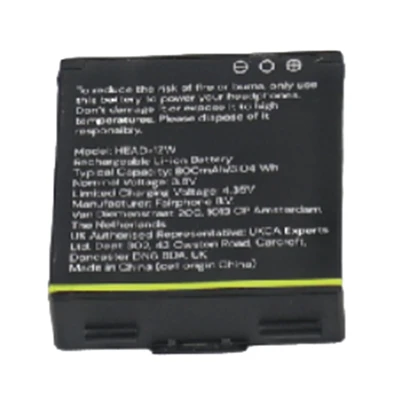
So yeah, price variation with marine lithium batteries and capacity isn’t just a straight line up or down. It’s a mix of cell manufacturing costs, fixed overhead, voltage, cycle life, and how you plan to use the battery. If you’ve got questions about your specific setup, don’t hesitate to reach out to talk through your requirements. We’re here to help you get the right power for your time on the water.
Two Wheeler Battery References:
- National Marine Electronics Association. (2022). Recommended Practices for Marine Energy Storage Systems.
- Battery University. (2023). Lithium-Ion Cell Manufacturing Cost Scaling for Portable and Large-Format Applications.
- American Boat and Yacht Council. (2021). Standard for Marine Lithium Battery Systems and Installation.
- Marine Retailers Association of America. (2024). 2024 Marine Power Systems Buyer’s Guide: Lithium Battery Cost and Performance Trends.
Zhuhai Greaton Electronic Technology Co., Ltd.
As one of the most professional marine lithium battery manufacturers and suppliers in China, we have world-leading production equipment and strong manufacturing capabilities. Please rest assured to wholesale advanced marine lithium battery in stock here from our factory. Customized orders are welcome.
Address: 2nd Floor, Building A3, No. 6, Liulu, Xinqing Science and Technology Industrial Park, Jing’an Town, Doumen District, Zhuhai City
E-mail: wangchen1@psbattery.cn
WebSite: https://www.cngreaton.com/
