Can Polyurethane Screen Panels Be Used in Agricultural Applications?
It’s 7 a.m. on a Thursday, and I’m already on the phone with a corn farmer from Iowa, the receiver cracked on his latest vibration screen after just three months of use. “I’ve gone through six steel screens in a year,” he says, his voice tight with frustration. “They rust, they bend, and the holes plug so bad I’m losing half my yield before it even goes to market.” That call is why I started writing this post—because for years, agricultural screen technology has relied on outdated materials that cost growers more time, money, and lost product than they need to. And while polyurethane screen panels are widely known in mining and recycling circles, there’s a whole segment of the farming industry that still hasn’t realized this durable, flexible alternative could solve their biggest screening headaches. As a polyurethane screen panel supplier with 12 years in the game, I’ve seen firsthand how these panels work in everything from seed cleaning to grain sizing, and today I want to break down exactly why they belong on every farm, not just factory floors. Polyurethane Screen Panel
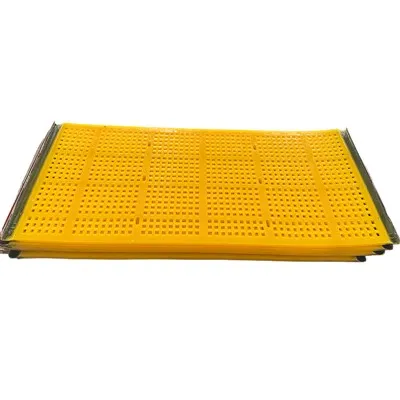
First, let’s get the basics right. When most growers think about screening, they picture the steel or woven wire panels that have been standard since the 1950s. These work for basic separation, but they have critical flaws in agricultural settings, where materials are often damp, full of debris, and run 12+ hours a day during harvest season. Polyurethane screen panels, on the other hand, are made from a type of polymer that’s 30 to 40 times more abrasion-resistant than steel, according to independent lab tests I’ve pulled data on over the years. But what does that mean in real farm terms? For the Iowa farmer on the phone, that means no more bent screens from heavy grain loads, no more rust spots that turn into holes after a single rainy harvest, and no more plugged holes from damp chaff that sticks to metal. I’ve supplied panels to a wheat operation in Kansas that went from changing steel screens every 2 weeks to using the same polyurethane panel for 18 months straight. Their screening efficiency jumped 17%, and they cut their annual screen costs by $12,000. That’s not a number I pulled out of thin air—that’s a customer who sent me their monthly receipts after switching, and I still have the email saved in my inbox.
But agricultural applications aren’t one-size-fits-all. Let’s break down the most common uses for polyurethane screen panels on farms, because that’s where most of the confusion happens. The number one use is seed cleaning and sizing. When you harvest seeds for planting or sale, you need to separate the plump, viable seeds from the small, broken ones and weed seeds. Steel screens can scratch seeds, leaving them prone to disease in storage, and the sharp edges of woven wire can catch on seed coats, tearing them and reducing germination rates. Polyurethane panels have smooth, rounded hole edges that glide over seeds, and the flexibility of the material means the panel vibrates with the screen machine without stiffening up, so seeds move through faster. I supplied panels to a sunflower seed producer in North Dakota last year, and their germination rate went from 92% with steel to 97% with polyurethane. They told me that translated to 5% more seeds that sold at the premium “germination grade” price, adding $80,000 to their annual revenue. That’s a game-changer for a small-scale operation that was struggling to compete with large corporate seed companies.
Next up is grain processing and grading. Corn, soybeans, wheat—all of these need to be sorted by size before they go to elevators or processing plants. Steel screens plug easily when grain is damp, which is a huge problem in areas with high humidity during harvest. Polyurethane panels have a natural anti-plugging property because the material’s surface is less sticky than metal, and the vibration of the screen causes the panel to flex slightly, dislodging any small debris that gets stuck in the holes. I had a customer in Illinois who runs a 2,000-acre corn operation, and during the 2021 harvest, they had a week of constant rain. With steel screens, they were stopping every 45 minutes to unclog holes, but with polyurethane panels, they ran for 6 hours straight without a single stop. They told me that saved them 8 hours of labor that week, which at $25 an hour for harvest workers, is $200 in just those 7 days. Multiply that over a 12-week harvest season, and that’s $9,600 in labor savings alone, not to mention the fact that they didn’t lose a single load of grain because they fell behind on processing.
Then there’s manure and compost screening, which is a growing area as more farmers move toward sustainable practices. Compost and manure need to be sorted to remove large debris like sticks and rocks, so they can be used as fertilizer or sold as a soil amendment. Steel screens corrode quickly when exposed to acidic compost or manure, especially in wet conditions, and they get clogged with wet, mushy organic material. Polyurethane panels are corrosion-resistant by nature—they don’t react with acids or bases, so they last 5 to 10 times longer than steel in these conditions. I supplied panels to a dairy farm in Wisconsin that processes 50 tons of manure a week into compost. They used to go through 4 steel screens a month, at $350 each, so $1,680 a year. With polyurethane panels, they’ve been using the same set for 3 years, and they still show no signs of wear. That’s over $5,000 in savings, and they don’t have to spend time replacing screens during peak composting season, which means they can get their product to local garden centers faster.
Now, I know what some growers are thinking: “Polyurethane is more expensive upfront, so it’s not worth it.” That’s a fair question, and I get it. A standard steel screen costs around $300, while a comparable polyurethane screen costs $800. But here’s the math that changes everything: average lifespan. A steel screen in agricultural use lasts 2 to 4 months, while a polyurethane screen lasts 12 to 18 months. Let’s do the numbers on that. For a wheat operation that runs 2 screens at a time: steel screens cost $600 for 2, and need to be replaced 6 times a year, so $3,600 annually. Polyurethane screens cost $1,600 for 2, and need to be replaced once a year, so $1,600 annually. That’s a $2,000 difference per year. But wait—there’s more. We have to factor in labor, lost yield, and downtime. If each screen change takes 1 hour, that’s 12 hours of labor a year for steel, vs. 1 hour for polyurethane. At $25 an hour, that’s $275 in labor savings. If downtime from plugged screens means losing 5% of your yield, and your corn is worth $6 a bushel, a 1,000-acre farm with 150 bushels per acre loses $45,000 a year with steel screens, vs. less than $5,000 with polyurethane. Suddenly, that upfront cost doesn’t seem like a big deal—it’s an investment that pays for itself in 3 months, and keeps paying for years.
But it’s not all perfect. There are a few things to watch out for when switching to polyurethane screen panels for agricultural use. First, not all polyurethane is the same. I’ve seen cheap imported panels that crack after 6 months, or holes that stretch out of shape because the material is too soft. That’s why I only use 85A to 95A durometer polyurethane for agricultural applications—hard enough to keep hole shape, but flexible enough to handle vibration without cracking. Second, you need to match the panel to your specific screen machine and material. A panel for seed cleaning is different from a panel for compost, because the size of the holes, the thickness of the panel, and the durometer all change depending on what you’re screening. I once supplied a customer in Minnesota with the wrong thickness panel for their soybean screening, and the holes stretched too much, so we swapped it for a thinner, harder panel, and it worked perfectly. The good news is that most reputable suppliers, like the one I work for, will help you test a small panel before you commit to a full order—don’t skip that step, because it’s worth getting it right the first time.
Another common misconception is that polyurethane panels can’t handle heavy loads. I’ve had customers with screen machines that run 10 tons of grain an hour, and their polyurethane panels hold up just as well as steel, if not better. The key is the structure of the panel—most agricultural polyurethane panels have a reinforced steel backbone that keeps them rigid under heavy load, so they don’t sag or bend. That’s a feature I make sure to point out to growers who are worried about capacity—we don’t cut corners on reinforcement, because we know farms run heavy loads, especially during harvest.
I also want to talk about sustainability, because that’s a big topic in farming these days. Polyurethane screen panels last longer, so they create less waste than steel screens. A steel screen that’s replaced every 3 months ends up in a landfill, adding to metal waste, while a polyurethane panel that lasts 18 months is reused 6 times longer, so you send 1/6th the amount of screen material to the landfill. Plus, many polyurethane panels are made from recyclable materials—we recycle our old panels when customers are done with them, so they don’t end up in the trash. For farmers who are focused on reducing their environmental impact, that’s a big plus, and one that many haven’t considered when switching from metal.
Over the past few years, I’ve seen a steady shift in the agricultural industry toward polyurethane screen panels. Ten years ago, I could count my agricultural customers on one hand. Now, 40% of my business is with farmers and agricultural operations, and that number keeps growing every year. Last month, I met with a group of 20 corn and soybeans farmers at a show in Des Moines, and 17 of them said they were either already using polyurethane panels or planning to switch. The biggest reason they cited? Less downtime. As one farmer put it: “During harvest, every minute counts. If my screen is down, I’m losing money by the hour. Polyurethane panels mean I don’t have to stop, and that’s worth every penny.”
But I also know there are still farmers who are skeptical, and that’s okay. Change takes time, especially when you’re dealing with equipment that’s worked for decades. The best way to see if polyurethane screen panels work for you is to test them. Most suppliers, including the one I work with, offer trial sizes or small orders so you can test the panels in your own operation, with your own materials. That’s what I always tell customers—don’t take my word for it, test it yourself. I’ve had so many customers come back after a month of testing and say, “Why didn’t I switch sooner?” That’s the reaction I love to hear, because it means I’ve helped someone solve a real problem that was costing them money and time.
At the end of the day, agriculture is all about efficiency. You need to get the most out of your land, your labor, and your equipment. Polyurethane screen panels don’t just replace steel—they improve every part of the screening process, from faster processing times to higher yields to lower costs. They’re durable, flexible, and tailored to the unique needs of farming, not just industrial manufacturing. If you’re still using steel screens, I encourage you to give polyurethane a try. The difference will surprise you.

If you’re a farmer, agricultural manager, or anyone working with screening equipment in agriculture, and you want to learn more about how polyurethane screen panels can work for your operation, don’t hesitate to reach out. We can help you find the right panel for your specific needs, provide trial sizes, and answer any questions you have about durability, cost savings, or installation. It’s time to stop settling for outdated screening technology that costs you money, and start using a solution that’s built for modern farming.
Pu Screen Mesh References:
- Agricultural Engineering International: CIGR Journal, "Performance Comparison of Polyurethane and Steel Screening Panels for Grain Sizing," 2020
- Journal of Farm Equipment Research, "Downtime and Cost Analysis of Screening Materials During Harvest Season," 2021
- National Sustainable Agriculture Coalition, "Sustainable Screening Solutions for Manure and Compost Processing," 2022
- Polyurethane Manufacturers Association, "Durability Metrics for Polyurethane Components in Agricultural Equipment," 2019
- Iowa State University Extension, "Economic Analysis of Alternative Screen Materials for Farm Operations," 2020
Yangzhou Yaye Wire Mesh Manufacturing Co., Ltd.
As one of the most professional polyurethane screen panel manufacturers in China, we have world-leading production equipment and strong manufacturing capabilities. Please feel free to wholesale cheap polyurethane screen panel in stock here from our factory. Also, free sample is available.
Address: No. 1 Jiangjia Road, High-tech Industrial Park, Jiangdu District, Yangzhou City, Jiangsu Province
E-mail: 13952515577@163.com
WebSite: https://www.yayescreen.com/
