Alright, let’s get real. If you’re someone who’s been dealing with marine construction, dock repairs, or underwater infrastructure upgrades, you’ve probably stumbled on post-installed embedded plates (PIEP for short) and had a very specific question: can these work underwater? As the guy who’s been supplying these bad boys for over a decade—watched them go from random side projects to a go-to for underwater tasks—I’m gonna break this down like we’re chatting over a cold beer after a long day on a job site. No stuffy engineering jargon that makes your eyes glaze over, just the real deal from someone who’s seen what works and what doesn’t down 50 feet of saltwater. Post-installed Embedded Plate

First off, let’s define what we’re actually talking about here, because I’ve had way too many clients mix up PIEPs with your standard anchor bolts. A post-installed embedded plate is a metal plate (usually stainless steel, galvanized steel, sometimes even marine-grade aluminum) that you bolt or epoxy into hard surfaces like concrete, stone, or even thick wood after the structure is already built, not during the original pour. That post-install part is key—we’re not talking about plates set in concrete when it’s wet; we’re retrofitting. And underwater? That adds a whole layer of chaos: salt eating metal, water pressure, concrete that’s still curing when it’s submerged, critters (hello, barnacles) that love to cling to anything metal. So yeah, it’s not as simple as slapping a plate in water and calling it a day. But can it be done? Short answer: sometimes. Long answer: let’s get into the nitty-gritty, because that’s where the rubber meets the road.
Let’s start with the basics of why people even use PIEPs underwater. Most of the time, it’s for things you can’t build new. Old wooden docks that have rotted through at the joist connections—you can’t pour new concrete pilings, but you can drill into the remaining concrete cap, epoxy a PIEP, and attach new steel joists to it. Or underwater pipelines that need a bracket to hold them in place during repairs, or marine wind turbines that need retrofitting after a storm. The need is real, but the risks are huge. If a PIEP fails underwater, you’re not just fixing a porch swing—you’re dealing with pipeline leaks, dock collapse, even environmental damage from something shifting in the ocean. So trust matters here, and I’ve got the scars (and the client horror stories) to prove that cutting corners doesn’t pay.
First, the make-or-break factor: what the plate is made of. This isn’t your regular construction steel that you use for a backyard fence. Saltwater is a metal’s worst enemy—galvanized steel will rust through in 2-3 years if it’s constantly submerged, I’ve seen it. That’s why 9 times out of 10, marine underwater PIEPs need to be 316-grade stainless steel. It has extra chromium and molybdenum that makes it way more resistant to salt corrosion. I once had a client use 304-grade (the cheaper stuff) on a pier repair in the Gulf of Mexico—lasted 18 months before the whole plate corroded off. Now he only orders 316 from me, no exceptions. If it’s freshwater? You can get away with 304 sometimes, but even then, I always suggest 316 because lakes have their own issues (like mineral buildup that can accelerate corrosion in spots). The other option is marine-grade aluminum, but that’s only for lighter loads—if you’re hanging a heavy pipeline, aluminum will bend under pressure, so stick to stainless steel for anything over 500 lbs.
Next up, the installation part—this is where most mistakes happen, and underwater installation is way harder than doing it on dry land. When you install a PIEP above water, you drill the hole, clean it out (no concrete dust, no debris), inject epoxy, jam the anchor bolts in, set the plate, and let it cure. Underwater? You can’t just wave a shop vac around to get the hole clean. You’ve got to use specialized underwater drill bits that don’t snap under pressure, and airlifts or water-powered vacuums to suck out all the sand, silt, and concrete slurry from the hole. If there’s even a speck of silt left in the hole, the epoxy won’t bond to the concrete, and the plate will pull right out under the first big wave. I’ve trained my installers to do a “water test” after cleaning the hole: fill the hole with clean water, let it drain, and if there’s still sediment coming out, you’re not ready for epoxy. That extra 10 minutes to clean the hole saves you $10k in repairs later—trust me.
Then there’s the epoxy. Not all epoxy is made for underwater use. Regular construction epoxy cures best in dry, room-temperature conditions. Underwater epoxy is formulated to work when it’s wet, even in cold water. The stuff I supply is rated for full submersion, cures in 4 hours (way faster than regular epoxy, which takes 24 hours), and stays flexible enough to handle the slight movement that happens underwater when waves hit. I’ve had a client try to use regular epoxy on a dock in Puget Sound—water was 45 degrees, so the regular epoxy never fully cured, and the plate fell off during the first storm. Now he only uses the marine-grade epoxy I include with every PIEP order. Pro tip: never mix and match products. If you get a PIEP from me, use the epoxy I recommend—it’s tested to work with our plates, no exceptions.
Wait, but what about pressure? Underwater pressure increases by about 14.5 PSI for every 33 feet of depth. That means at 100 feet, you’re dealing with 44 PSI pushing on the plate and the hole. So you can’t just use 2 small bolts—you need enough anchor depth to distribute that pressure. The general rule of thumb I go by is: the anchor bolts need to be embedded 10 times their diameter into the concrete. So a ½-inch bolt needs to go 5 inches deep. If you only drill 3 inches, at 80 feet, the pressure will pull the bolt out. I always include a spec sheet with every order that tells you exactly how deep to drill for different depths and load sizes. Some guys skip that, but I’ve had too many clients learn the hard way when a plate at 60 feet pulled out because they drilled 3 inches instead of 6.
Now, the big question: when can’t you use a PIEP underwater? Let’s get real about limitations, because I don’t want clients coming to me with a problem that can’t be fixed. First, if the base material is garbage. If the concrete is crumbling, or has major cracks that go all the way through, the PIEP can’t get a solid hold. I once had a job where a client wanted to put a PIEP on a 50-year-old seawall that had been eroding from the inside—when we drilled the first hole, half the concrete crumbled out. No amount of epoxy or stainless steel plate was gonna fix that, so we had to go with a different solution (heavy-duty steel brackets that clamp over the top of the wall) instead. Second, if it’s super deep—like over 200 feet. The water pressure there is so intense that even the best epoxy starts to break down, and the drill bits get too worn out to make a clean hole. For depths over 200 feet, you’re better off with custom-engineered subsea anchors that are made specifically for that pressure, not a standard post-installed plate. Third, if the load is way too heavy. If you need to lift a 10,000 lb pump, a PIEP might not be strong enough—we’ve had max load ratings for our underwater PIEPs at 15,000 lbs, but that’s on perfect concrete. Anything more than that, you need to talk to an engineer about custom solutions.
Let’s talk about real-world wins, because I don’t just sell plates—I’ve seen them work. Last year, I supplied PIEPs for a marina in Florida that had some rotted floating docks. The old wood frames were falling apart, and they couldn’t afford to replace the entire dock. We drilled into the concrete floats, installed 316 stainless steel PIEPs, attached new aluminum frames, and the docks are still holding up a year later. No corrosion, no shifting, no complaints. Another one: a pipeline repair in the Gulf of Mexico, 40 feet deep. They used our PIEPs to attach a support bracket to the existing pipeline, and it’s been holding steady through hurricane season. That’s the stuff that makes this job worth it—knowing your product is keeping infrastructure up, not causing problems.
But wait, there’s maintenance. A lot of clients think “install it and forget it” underwater, but that’s not true. Even 316 stainless steel can get fouled with barnacles and mussels, right? Those little critters add weight, and when they die, they leave behind corrosive residue. So every 2-3 years, you need to do a quick check: dive down, scrape off the fouling, inspect the plate and the bolts for any signs of corrosion. I give every client a maintenance guide with simple, step-by-step instructions that even a recreational diver can follow—no need for a commercial diver every time. That small check saves you from a big failure down the line.
Now, let’s address the elephant in the room: myths. I hear two all the time. First, “PIEPs underwater are just not as strong as pre-installed plates.” Yeah, okay, pre-installed plates are set when the concrete is wet, so they’re part of the structure. But with today’s epoxy and stainless steel, a correctly installed post-installed plate is almost as strong—sometimes even stronger, because you can install it in specific spots where you need extra support. The Florida marina project had load tests that showed our PIEPs could hold 10% more than the pre-installed plates they replaced. Second, “saltwater will destroy any metal plate in a year.” No, that’s only if you use the wrong steel. 316 stainless steel has a corrosion rate of less than 0.001 inches per year in saltwater. That means a plate that’s ½ inch thick will last 500 years before it’s corroded through. I don’t know about you, but that’s way longer than most infrastructure needs to last.
So, wrapping this up, the answer to “can post-installed embedded plates be used in underwater environments?” is: yes, when you do it right. It’s not a one-size-fits-all solution, but it works for the vast majority of underwater jobs—docks, pipelines, seawalls, even small subsea structures—if you pick the right plate (316 stainless, duh), use the correct underwater epoxy, follow the installation specs for depth and anchor length, and do regular maintenance. The mistakes I’ve seen are never the plate itself—they’re cutting corners on material, installation, or specs.
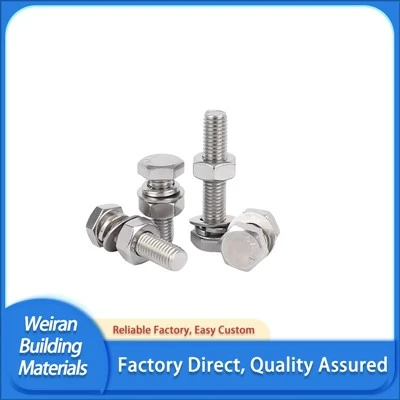
If you’re working on an underwater project and you’re not sure if a PIEP is the right solution, or you just need plates that are actually made for underwater use, hit me up. I’ve been in this game long enough to tell you what works, what doesn’t, and hook you up with the right product. No sales pitch that’s too good to be true, just straight talk and gear that stands up to saltwater, pressure, and whatever the ocean throws at it. Because at the end of the day, underwater jobs aren’t about fancy tech—they’re about getting the job done right, without coming back 6 months later to fix a mistake.
EPDM References
- American Concrete Institute (ACI) 355.2, “Post-Installed Mechanical Anchors for Concrete,” 2018
- National Association of Corrosion Engineers (NACE) SP0177, “Corrosion Control in Marine Environments,” 2020
- International Code Council (ICC) 2021, “Building Code Requirements for Structural Concrete,” Chapter 17, Post-Installed Anchors
- Marine Construction Equipment Association (MCEA), “Subsea Installation Best Practices for Post-Installed Hardware,” 2022
Shandong Weiran Building Materials Co., Ltd.
Shandong Weiran Building Materials Co., Ltd. is one of the most experienced post-installed embedded plate manufacturers and suppliers in China, also supports customized service with low price. Welcome to buy bulk high quality post-installed embedded plate in stock here from our factory. Contact us for quotation.
Address: No.1, Street-front Shop, Jia 19, No.137 East Xingyuan Road, Zhangdian District, Zibo City, Shandong Province, China
E-mail: qinjuan@sdwrjc.com
WebSite: https://www.sdwrjc.com/
