If you’re a manufacturer relying on spring steel wire for products ranging from automotive suspension components to industrial valves and even consumer goods like trampolines, you already know that the wire itself is only half the battle. Spring steel is inherently strong and flexible, but without the right surface treatment, it’s vulnerable to corrosion, wear, and fatigue—problems that can lead to premature part failure, costly downtime, and even safety risks. As a supplier of spring steel wire with over a decade of experience working directly with engineers, production managers, and small-batch job shop owners, I’ve seen firsthand how the right surface treatment can transform a standard wire into a part that lasts 10, 20, even 30+ years in harsh operating environments. Spring Steel Wire
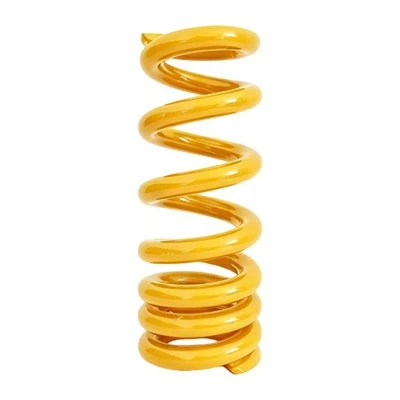
Today, I’m breaking down the most common, scientifically validated surface treatments available for spring steel wire, their use cases, pros, cons, and how to choose the right one for your application.
First, let’s start with a quick baseline: spring steel wire is typically made from high-carbon steel, alloy steel (like chrome-vanadium or chrome-silicon), or music wire (a high-grade carbon steel optimized for precision). Its core properties—tensile strength, elasticity, and fatigue resistance—are determined during the wire drawing and heat treatment processes, but surface treatments alter the outer layer to address specific weaknesses without compromising the core.
1. Phosphating
Phosphating is one of the oldest and most widely used surface treatments for spring steel wire, dating back to the early 20th century. It’s a conversion coating, meaning it reacts chemically with the steel surface to form a thin, porous layer of phosphate crystals—usually zinc phosphate or manganese phosphate—about 0.001 to 0.005 millimeters thick. The pores in this layer are a key benefit: they can hold lubricants (like oil or wax) for forming processes (drawing, bending) or in-service lubrication, reducing friction during manufacturing and preventing galling or breakage when the spring is under load.
For spring steel, phosphating is most commonly used as a pre-treatment before painting, powder coating, or lubricant application, because it creates a rough, adhesive surface that helps the finish bond better than bare steel. It also provides a small amount of corrosion resistance on its own, enough for indoor or moderately dry environments, but it’s not ideal for extreme humidity or outdoor exposure. One thing to note: phosphating requires rigorous degreasing and pickling steps before application—any remaining oil or scale will cause uneven coating, which is why we work closely with our clients to align wire cleaning schedules with their treatment needs.
I’ve seen phosphating make a huge difference for clients making small coil springs for office furniture: the phosphate layer holds the wax lubricant during spring forming, reducing die wear by up to 25% and cutting part breakage during production. The downside? It’s not the best for high-wear applications—like springs used in heavy machinery or off-road vehicles—where the thin crystal layer can scratch off over time.
2. Electro-Galvanizing (Zinc Plating)
Electro-galvanizing is a common corrosion-resistant treatment that deposits a thin layer of zinc (usually 0.005 to 0.02 millimeters thick) onto the spring steel wire via an electrochemical process. The zinc acts as a sacrificial barrier: when exposed to moisture or oxygen, zinc oxidizes instead of the steel underneath, protecting the core even if the coating is scratched. That makes it ideal for outdoor applications, like automotive suspension springs or agricultural equipment parts, where corrosion is a top concern.
For spring steel, electro-galvanizing is popular because it maintains the wire’s tensile strength and elasticity, as long as the coating thickness is kept low—thicker zinc layers can make the wire more brittle, leading to spring breakage under repeated load cycles. That’s a critical detail: we don’t offer zinc plating over 0.025 mm for spring steel, because we’ve tested thicker coatings and found they reduce fatigue life by 15-20% in cyclic load tests. The process is also cost-effective, especially for high-volume runs, which is why it’s a go-to for automotive OEMs producing millions of springs annually.
But it’s not without downsides. Electro-galvanized wire can produce hydrogen embrittlement during the plating process: hydrogen atoms from the electrolyte can penetrate the steel’s surface, causing it to become brittle and prone to cracking under tension. To prevent this, all our galvanized wire goes through a post-plating baking process (200-220°C for 4-8 hours) to drive out trapped hydrogen. It’s an extra step that adds a bit of cost, but it’s non-negotiable for spring applications, where brittle failure is a safety hazard.
3. Hot-Dip Galvanizing
Hot-dip galvanizing is a different process: wire is dipped into a bath of molten zinc (around 450°C) rather than coated via electricity, creating a much thicker coating (0.05 to 0.2 mm) than electro-galvanizing. This thicker layer provides superior corrosion resistance—hot-dip galvanized springs can last 50+ years in mild outdoor environments, compared to 10-15 years for electro-galvanized parts.
That makes hot-dip galvanizing the right choice for extreme outdoor applications, like bridge expansion joints, marine hardware springs, or off-road vehicle components that are exposed to salt, rain, and dust. The thicker coating also offers better scratch resistance, so it’s less likely to wear off during handling or service. However, the high temperature of the molten bath can affect the spring steel’s core properties: we have to carefully control the wire’s chemical composition before hot-dipping, and we often perform a secondary tempering step after coating to restore elasticity that might be lost during the process.
The big tradeoff here is cost and lead time: hot-dip galvanizing is slower than electro-galvanizing, and the thicker coating makes the wire less precise—critical for springs that require tight dimensional tolerances, like small precision springs for medical devices. It’s also heavier, which might be a concern for applications where weight is a factor, like aerospace components.
4. Powder Coating
Powder coating is a dry finishing process where a electrostatically charged polymer powder is sprayed onto the spring steel wire, then cured in an oven at 150-200°C to form a hard, durable, smooth finish. Unlike liquid paint, powder coating has no solvents, so it’s thicker, more uniform, and less prone to chipping or fading over time. It also offers a wide range of colors and textures, which is a bonus for consumer-facing products like patio furniture springs or toy components.
For spring steel wire, powder coating is popular because it provides excellent corrosion and wear resistance, with a coating thickness that can be adjusted from 0.05 to 0.5 mm depending on the application. That flexibility makes it suitable for both indoor and outdoor use, and it’s highly customizable. But there are two key limitations: first, powder coating is not ideal for applications that require extreme elasticity or tight bend radii. The thick polymer layer can crack if the spring is bent too sharply, so we recommend it only for springs with a minimum bend radius 10x the wire’s diameter. Second, the curing process can affect the wire’s tensile strength if not controlled properly—we test every batch of powder-coated wire to ensure it meets the ASTM A229 standard for spring steel, which specifies minimum tensile strength for different wire gauges.
5. Polishing (Dull vs. Bright)
Polishing is a surface treatment that creates a smooth, reflective finish on spring steel wire, either mechanically (via abrasive belts or brushes) or chemically (via acid etching to remove surface imperfections). The most common types for spring steel are bright polishing and dull polishing. Bright polished wire has a mirror-like finish, with a surface roughness of less than 0.1 micrometers, which reduces friction during spring forming and gives the final part a clean, high-end appearance. That makes it ideal for precision applications like medical device springs, electronics connectors, and luxury consumer goods.
Dull polished wire, on the other hand, has a slightly matte, non-reflective finish, with a roughness of 0.2-0.5 micrometers. It’s often used as a pre-treatment for other coatings, like paint or powder, because the slightly rougher surface improves adhesion. Polishing doesn’t add any corrosion resistance, so it’s only used for applications where the wire will be protected by a secondary coating, or for indoor, low-wear environments. It’s also more expensive than unpolished wire, because the process adds time and labor, and it removes a small amount of material—we limit polishing to a maximum of 0.002 mm of material removed to avoid weakening the wire.
6. Black Oxide Coating
Black oxide (or black oxide conversion coating) is a thin, chemical conversion layer that forms a black, matte finish on the spring steel surface, usually 0.001 to 0.002 mm thick. It’s created by immersing the wire in a hot (140-150°C) alkaline solution, which reacts with the steel to form iron oxide (magnetite) on the surface. Black oxide is prized for its low cost, ease of application, and ability to improve the appearance of the final part, making it popular for hardware, decorative springs, and firearms components.
Corrosion resistance is its main limitation: black oxide provides only mild protection, enough for indoor dry environments, but it will rust quickly if exposed to moisture or salt. It’s also very thin, so it offers almost no protection against wear, so it’s not used for high-stress springs. One advantage, though: black oxide doesn’t affect the wire’s dimensions, so it’s ideal for precision springs that require exact size tolerances. We often use black oxide for small runs of decorative springs for furniture or lighting fixtures, where appearance is more important than long-term corrosion resistance.
How to Choose the Right Treatment for Your Application
Now that we’ve broken down the options, how do you pick the right one? Let’s start with your environment: if your springs will be exposed to outdoor conditions, salt, or high humidity, galvanizing (either electro or hot-dip) or powder coating is the way to go. If you need corrosion resistance but tight dimensional tolerances, electro-galvanizing is better than hot-dip. If your application is indoor, low-wear, and you care about appearance, black oxide or bright polishing is a good fit. If you’re using the wire for forming processes (like drawing or bending), phosphating is a must to reduce friction and prevent breakage.
Also, consider your production volume: high-volume runs usually benefit from cost-effective, fast treatments like electro-galvanizing or black oxide, while small-batch or custom applications can take advantage of more specialized treatments like hot-dip galvanizing or custom polishing.
A Note from Our Team
At our spring steel wire facility, we’ve tested every one of these treatments ourselves, working with engineers to refine processes that minimize core property degradation—like the hydrogen embrittlement bake for galvanized wire, or the post-tempering for hot-dipped wire. We don’t offer any treatment that compromises the wire’s tensile strength or fatigue life, because we know that for our clients, a spring that fails prematurely isn’t just a waste of material—it’s a risk to their reputation and their customers.
If you’re not sure which treatment is right for your next project, or you need custom sizes, chemistries, or treatment combinations, reach out to our team to discuss your requirements. We’re happy to send sample wire, share test data, or walk through how our surface treatments can improve your part’s performance.
References
ASM International. (2020). Surface Treatments for Steel. ASM Handbook, Volume 5A: Surface Engineering.
ASTM International. (2021). Standard Specification for Steel Wire, Spring Quality. ASTM A229.
Davies, J. (2019). Zinc Coating Processes for Steel. Corrosion Science, 156, 108-115.
ISO 1461:2020. Hot-Dip Galvanized Coatings on Fabricated Iron and Steel Articles. Specifications and Test Methods.
Spring Steel Wire If you’re ready to move forward, connect with our procurement team to discuss your spring steel wire needs and the best surface treatment for your application.
Baoding Zhongxin Spring Manufacturing Co., Ltd.
We’re known as one of the most reliable spring steel wire manufacturers and suppliers in China. With abundant experience, we warmly welcome you to buy durable spring steel wire made in China here and get pricelist from our factory. All customized springs are with high quality and competitive price.
Address: West Side, 200 Meters North of Chenzhuang Gas Station, Pangkou Town, Gaoyang County, Baoding City, Hebei Province, P.R. China
E-mail: 13292951555@163.com
WebSite: https://www.zhongxinind.com/
