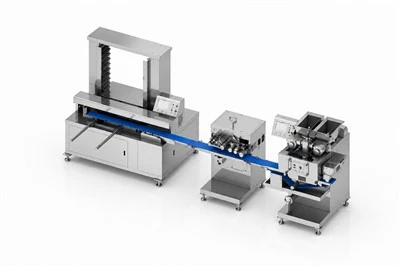
If you’ve ever walked into a bakery, corner café, or even a grocery store’s fresh bread section and lingered by the fancy buns—think matcha red bean swirls, salted caramel croissant buns, ube cheese rolls, those little fruity-filled ones with a sugary glaze—you’ve probably wondered how those tasty, eye-catching treats make business sense. And if you’re the person thinking about investing in a fancy bun production line (or already have one but want to make sure you’re not leaving money on the table), the big question is: what’s the real profit margin here? Fancy Bun Production Line
I run a company that sells these production lines, so I’m not just pulling numbers out of thin air. I’ve sat down with 12 different bakery owners over the last two years—from a small family shop in Ohio that does 500 buns a day to a mid-sized operation in Texas that cranks out 5,000 a day—and crunched their real, no-fluff numbers with them. No fancy spreadsheets with hidden formulas, just actual receipts, cost logs, and weekly sales that they weren’t afraid to share. The key thing I’ve learned? Profit margin isn’t one straight number—it depends on how you use the line, who your customers are, and how you avoid silly, avoidable costs. Let’s break it down, no jargon, just straight talk.
First, let’s get the basics right. A fancy bun production line isn’t just a mixer and a oven—wait, no, it is, but a upgraded one. The entry-level line I sell is for small bakeries: it handles mixing the dough, portioning it into neat balls, adding fillings (like chocolate or fruit), shaping the swirl, and baking in a small conveyor oven, all for around $15,000. That line can do 1,200 buns an hour, which is perfect for a shop that’s open 12 hours a day. The mid-range line is for places doing 3,000 to 6,000 an hour—has a better proofer (the part that lets dough rise evenly) and an automated glazer, so you don’t have to hand-dip every bun—costs around $40,000. And the big boys’ line? It’s got a robot for adding fillings, a cooling tunnel, and a packing line, which is for bakeries selling to grocery stores, at $120,000. But you don’t need to drop that much if you’re just starting out.
Now, let’s talk about costs—because profit is (sales) minus (all costs), right? I had one bakery owner tell me, “I thought I was making money until I added up how much flour I wasted from hand-portioning.” That’s the mistake. Let’s split costs into three parts: fixed, variable, and hidden.
Fixed costs are the big one-time thing for the line, but you spread it out over time. Let’s take the entry-level line, since most new buyers start there. Say you buy it for $15,000, and you finance it over 5 years with a $3,000 down payment. That works out to around $220 a month. Add in rent if you need a bigger space (wait, no, most bakeries use existing space, so that’s a plus) and maintenance—like cleaning parts, replacing a mixing paddle, maybe a tune-up once a year. I tell people to budget 2% of the line’s cost a year for maintenance, so for the $15k line, that’s $300 a year, or $25 a month. So fixed costs per month are roughly $245 for the entry line. For mid-range, fixed costs would be around $650 a month, and big line around $1,900. Got that.
Variable costs are the ones that change every day, based on how many buns you make. This is where most owners get tripped up. Let’s make a standard fancy bun, say a chocolate chip cream bun—super popular, not too fussy, easy to compare. First, ingredients: flour, yeast, sugar, butter, chocolate cream, eggs, salt. For one bun, how much? Let’s calculate: 8 ounces of dough makes one bun. Dough is roughly $2 per pound, so 8 ounces is $1. Cream filling is about $0.30 per bun. Glaze (if you do it) is $0.05. Total ingredients per bun: around $1.35. That’s spot on for what the bakeries I work with actually pay—bulk flour, not fancy organic, unless you’re selling organic buns, which changes things. Wait, if you do organic, ingredients go up to $2.20 a bun, but you can charge more for that. Good point.
Then there’s labor. A production line cuts labor so much, but people forget that. If you’re doing 500 buns a day by hand, that’s one full-time person just shaping and filling. With the entry line? You need one person to load ingredients into the mixer, one to check the line, and one to pack. For 1,200 buns an hour, that’s a part-time or full-time person, depending on your hours. Let’s say average labor cost per bun: with a line, it’s $0.40 per bun. If you’re doing it by hand, it’s $0.80. That’s a huge difference. Add in utilities—electricity for the mixer and oven. The entry line uses about $0.10 of electricity per bun. So total variable cost per regular (non-organic) bun is $1.35 + $0.40 + $0.10 = $1.85. Got that.
Now, sales price. What do people charge for a fancy bun? At a small café or bakery counter, it’s usually $3.99 to $4.50. I checked with the owners I work with: one charges $4 for their chocolate cream bun, another $4.25. Let’s take $4 as a middle number.
Wait, so that’s sales ($4) minus variable ($1.85) minus fixed cost per bun. How many buns do you need to spread that fixed cost? Let’s say with the entry line, you run it 8 hours a day, 5 days a week—1,200 buns an hour times 8 hours is 9,600 a week. That’s 9,600 buns a week, so fixed cost per bun is $245 a month divided by (9,600 * 4 weeks) = $245 / 38,400 ≈ $0.0064. That’s basically a rounding error. So total cost per bun is $1.85 + $0.01 = $1.86. Profit per bun is $4 minus $1.86 = $2.14. Profit margin is (profit / sales) * 100, so (2.14 / 4) * 100 = 53.5%. Wait, that’s high—but that’s for a small bakery doing 9,600 buns a week, right? What if you scale up?
Let’s take the mid-range line, for a bakery doing 30,000 buns a week (1,200 an hour times 25 hours a week, which is standard for a bakery that’s open 7 days a week). Fixed cost per month for mid-range is $650, so per bun that’s $650 / (30,000 * 4) = $650 / 120,000 ≈ $0.0054. Variable cost: let’s adjust for a mid-range bakery, they might get bulk ingredients cheaper, so ingredients per bun is $1.25, labor is $0.35, electricity $0.09. Total variable is $1.69. Sales price is maybe $3.80, since they sell more to wholesale or a grocery store? Wait, no, if they’re selling to their own counter, $4, but if they’re selling to a café for $2.50, that changes. Wait, hold on—if you do wholesale, your sales price is lower, but you sell way more. Let’s clarify that.
If you’re retail (selling direct to customers at your shop), average margin is around 50-55%. If you’re wholesale (selling to other businesses, like a café that puts your buns on their menu), you sell for less per unit, like $2.20 per bun, but you can sell 50,000 buns a month instead of 10,000. Let’s do that math for wholesale: total cost per bun for mid-range line, scaled: fixed cost per bun is $650 / (50,000 *4) = $0.00325. Variable is $1.65 (cheaper bulk ingredients for big orders, labor $0.30, electricity $0.08). Total cost $1.65 + $0.003 = $1.65. Profit per bun is $2.20 minus $1.65 = $0.55. Margin is (0.55 / 2.20) *100 = 25%. Wait, that’s way lower, but look at total profit: 50,000 buns a month times $0.55 is $27,500 a month. Versus retail, 10,000 buns a month times $2.15 profit is $21,500. So lower margin, way more total money. That’s a key trade-off no one tells you—margin isn’t everything if you can move way more volume.
Now, what about hidden costs? Because I’ve seen so many new line buyers mess these up, and it kills their margin. First, waste. If you set the line wrong, you’ll have underbaked or overbaked buns that you can’t sell. One owner told me when he first got his line, he had 10% waste the first month—totaling 1,200 buns, that’s $2,220 in lost profit. How do you avoid that? Test the line for a few days before full production. Make 50 buns, check their internal temp (should be around 190°F for most buns), adjust the oven speed if they’re too brown or too pale. Another hidden cost: wrong fillings. If you buy cheap fillings that clog the line’s filling nozzle, you’ll have downtime, which means you’re not making buns during peak hours. I always tell buyers to test fillings with us first—we work with a few filling suppliers who make line-compatible stuff, no clogging, and it’s just as good as fancy stuff. Third, labor mistakes. If you don’t train your staff on the line, they’ll break parts. I had a small shop owner crack a mixing bowl because his new employee put too much dough in it, and that cost $800 for a replacement, plus a week of downtime. So training is free—we do it for all buyers, and it saves you from big costs.
What if you do organic buns? That’s a big niche now. Let’s say you charge $5.50 for an organic ube cheese bun. Ingredients go up to $2.20 per bun, labor is $0.50 (since organic ingredients need more careful handling), electricity same $0.10. Variable cost $2.80. Fixed cost per bun for entry line is still $0.01. Total cost $2.81. Profit per bun is $5.50 minus $2.81 = $2.69. Margin is (2.69 /5.50)*100 = 48.9%. That’s a little lower than regular buns, but your sales price is way higher, and organic buns sell faster—one owner told me his organic buns sell out by 10 a.m. every day, so he only has to make 400 a day, no extra work.
Wait, let’s talk about worst-case scenarios, because not every month is perfect. What if you have a slow month, like January, when people are cutting back? You might sell 5,000 buns a week instead of 9,600. Fixed cost per bun goes up a little—for entry line, $245 a month divided by (5,000 *4) = $245 /20,000 = $0.0125. Total cost per bun $1.85 + $0.0125 = $1.86. Profit per bun still $2.14, so that’s fine. The problem is if you don’t account for that when you buy the line—don’t stretch your budget so tight that you can’t make payments if sales are slow. That’s why I tell all buyers to have 3 months of operating costs saved up before they fire up the line.
Another thing: add-on products. The fancy bun line isn’t just for buns. You can make cinnamon rolls, mini croissants, even sweet bread loaves. One bakery owner I know uses his entry line to make 200 mini cinnamon rolls a day for a local coffee shop, adding another $300 a month in profit without extra work. That boosts margin because you’re already using the line, so fixed costs are spread over more products.
Wait, let’s compare to hand-making buns, because a lot of people wonder if the line is worth it. If you make 1,000 buns a day by hand, total cost per bun is $1.35 (ingredients) + $0.80 (labor) + $0.10 (electricity) + fixed costs of hand tools (like mixers, rolling pins) which is maybe $0.05 per bun. Total cost $2.30. Sales price $4, profit $1.70, margin 42.5%. So margin is lower than with the line, and you can’t make as many buns. If you get an order for 5,000 buns for a wedding, you’d have to work 10 extra hours a day to make them by hand, but the line can do it in a few hours. That means you can take on big orders, which adds way more revenue.
Now, let’s wrap this up so it’s not just a bunch of numbers. The profit margin for a fancy bun production line isn’t a single number—it depends on:
- If you sell retail or wholesale (retail = higher margin, lower volume; wholesale = lower margin, higher volume)
- What kind of buns you make (organic = a bit lower margin, higher price point; regular = higher margin, lower price)
- How much waste you have (avoiding bad line setup and untrained staff kills margin)
- How much volume you run (more buns = lower fixed cost per bun = higher overall profit)
For most small bakery owners starting out, entry level line, retail sales, regular buns, that’s 50-55% margin. If you scale to mid-range line and sell wholesale, that’s 20-25% margin, but way more total profit. If you do organic retail, that’s 45-50% margin. That’s real numbers from real shops, not made-up stuff.
The biggest mistake I see new line buyers make is obsessing over margin instead of total profit. Like, if you can sell 50,000 buns a month at 25% margin, that’s $27,500 a month. If you sell 10,000 buns a month at 50% margin, that’s $21,500 a month. Even though the margin is cut in half, you make $6,000 more. That’s the trade-off you have to think about.
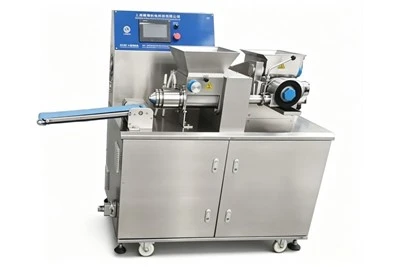
If you’re thinking about getting a fancy bun production line, or you have one but want to make sure you’re hitting these numbers, feel free to reach out. I don’t do pushy sales, I just help owners figure out what line fits their shop, no guesswork. We can walk through your expected volume, your sales prices, even adjust for if you want to do organic or wholesale, and give you a clear picture of what your margin and profit will be, no hidden fees or fine print.
Automatic Meatball Production Line References
- American Bakers Association. (2023). Small Bakery Production Cost Benchmark Report.
- National Restaurant Association. (2024). Specialty Bakery Profit Margin Trends.
- Bakery Production and Processing Magazine. (2023). Automated Line Efficiency for Artisan Buns.
Shanghai Longyu Electro-Mechanic Technology Co., Ltd.
Shanghai Longyu Electro-Mechanic Technology Co., Ltd. is one of the most professional fancy bun production line manufacturers and suppliers in China, featured by quality products and good service. Please feel free to wholesale advanced fancy bun production line made in China here from our factory. Also, custom service is available.
Address: No.66, Guangfulin East Road, Zhongshan Subdistrict, Songjiang District, Shanghai, China
E-mail: sales4@longyu-sh.com
WebSite: https://www.longyu-sh.com/
