Hey there, fellow tech lovers and circuit board squad! If you’ve ever ripped open a cheap wireless earbud, a budget smart watch, or even the back of your old portable Bluetooth speaker and stared at that squishy green circuit board inside, you’ve probably wondered: “Wait, is this just a random chunk of fiberglass? Why does every small gadget use it anyway?” As the owner of a multilayer FR4 PCB supply company, I get this question all the time, especially from folks who work in consumer electronics startups or small brands trying to keep costs down without flaking on quality. Let’s cut through the jargon and talk real: can a multilayer FR4 PCB actually work in consumer gadgets? Spoiler alert—short answer is yes, but let’s break down why that’s not a fluke, and why it’s the unsung hero of every device in your junk drawer. Multilayer FR4 PCB Board

First, let’s get the basics straight, no textbook terms. FR4 is just a type of epoxy resin bonded to woven fiberglass (that’s the glass fiber cloth you see), and multilayer means we stack several thin layers of that FR4 together, with tiny copper traces etched on each layer, connected via little holes we drill and fill with conductive metal. I know a lot of newbie design engineers freak out at the word “multilayer” at first—they think it’s only for fancy aerospace or medical gear, way too expensive for a $20 wireless charger or a $50 smart fitness tracker. But here’s the thing: consumer electronics live or die by three things: cost, space, and reliability. And FR4 multilayer PCBs check all three boxes way better than the alternative you might be thinking of, like rigid-flex or high-tech ceramics.
Let’s start with the big one: cost. As a supplier, I’ve seen so many startups try to cut corners with single-layer PCBs for their new gadget, only to hit a wall when they realize they can’t cram all the tiny parts they need into that one thin board. Single-layer is like a one-lane road—you can only have so many wires (traces) going from point A to point B, and if you have to cross paths, you either short them out or make the board way bigger than it needs to be. Multilayer FR4? That’s a highway system. We can layer the traces on separate levels—power on one layer, ground on another, signal traces on two more—so they don’t cross. That means we can fit way more functionality into a smaller board, which directly translates to lower manufacturing costs. For example, a basic wireless earbud needs a microcontroller, a Bluetooth chip, a battery connector, and a tiny microphone all packed into a space smaller than a dime. A single-layer board would have to be twice as big, or you’d have to skip parts like the small sensors that make the earbuds detect when they’re in your ear. Skipping those parts would make the gadget cheaper to build, but way worse for consumers—they’d have to take them out every time to pause music, which is a huge flop in the market. Multilayer FR4 lets us fit all those parts without jacking up the price. I’ve got a client that makes a $30 portable Bluetooth speaker—they tried rigid-flex first, and each prototype cost them $12 apiece, which would’ve made the speaker’s retail price way too high. Switched to a 4-layer FR4 board, and the production cost dropped to $2.80 per unit. That’s the kind of math that makes small consumer brands actually make a profit.
Next up, space. Consumer electronics are getting tinier by the day, and everyone wants their gadgets to fit in a pocket or a small bag, not be a brick. A multilayer FR4 PCB is way thinner than you’d think—we can make them as thin as 0.2mm for small wearables, or up to 2mm for bigger gadgets like smart refrigerators’ control panels. Compare that to a single-layer board of the same size, which would be way thicker because you have to bend or route traces around each other. Even for bigger devices like laptop motherboards, which are basically super complex multilayer FR4 boards, we can cram 10+ layers into a space that’s just a few millimeters thick. And here’s a secret most people don’t talk about: FR4 is super easy to customize. If a gadget only needs 2 layers (the basics, like power and signal), we don’t make them 4 layers—we just make 2-layer FR4 boards. Wait, but hold on—this blog is about multilayer, so why bring up 2-layer? Because a lot of people confuse “multilayer” with “overkill for small gadgets.” No—multilayer just means more than two, and even 4-layer is a huge win for most consumer devices. For example, a cheap smart watch with heart rate monitoring needs a photodiode (that picks up light to measure your pulse), a microcontroller, a Bluetooth chip, and a vibration motor. A 2-layer board would work, but the traces would be so tight that they’d interfere with each other—your heart rate sensor would give random readings because the power trace from the vibration motor would bleed into the signal trace from the sensor. A 4-layer FR4 board solves that: we put the power trace on a separate inner layer, ground it on another, and the sensor and signal traces on the outer layers, far enough apart to keep interference out. That means the smart watch actually works, not just looks cool on a shelf. I’ve had at least 15 clients in the last two years tell me that without a simple 4-layer FR4 board, their product would’ve been a dud on Kickstarter.
Now, the part that scares a lot of people: reliability. Consumer electronics get tossed in bags, dropped on counters, sat on by accident—they take a way worse beating than a server in a data center. FR4 is made to handle that abuse. It’s resistant to temperature swings (from freezing cold in your pocket on a winter walk to warm inside your car in the summer), moisture (spill a soda on your wireless headphones? FR4 doesn’t dissolve), and vibration. I’ve got a client that makes rugged portable chargers for construction workers—they dropped their prototypes off roofs, submerged them in water, and ran them for 24 hours straight, and the multilayer FR4 board never failed. Compare that to some cheaper alternatives, like paper-based PCBs that were used in old disposable gadgets—they fall apart if they get even a little damp. Or high-tech materials like PTFE, which is used for some high-frequency gear, but it’s way more expensive, and more brittle, so it cracks if you drop it. FR4 is tough, but also flexible enough for small bends—we can make multilayer FR4 boards with thin enough layers to bend a little, which is perfect for foldable phone displays or curved earbuds. Wait, you might be thinking: “Curved earbuds? Those are flex boards, right?” Yeah, but a lot of flex boards use FR4 as the base layer—we make multilayer FR4 flex boards that bend around the shape of an ear, which is way more reliable than a full rigid-flex board that can crack after a few bends. I’ve tested a batch of our flexible multilayer FR4 boards by bending them 10,000 times (that’s about 2 years of daily use), and they still worked like new. That’s the kind of reliability consumers actually want—they don’t want to buy a new pair of earbuds every month because the board broke.
But wait, let’s be real—multilayer FR4 isn’t perfect, and I’d be lying if I said there aren’t times when it doesn’t make sense for consumer electronics. For example, if you’re making a super cheap gadget like a disposable smart key fob that only needs two or three parts, a single-layer or even a 2-layer FR4 board is overkill, and you can make it for even less. Or if you’re making a high-frequency gadget like a 5G wireless router, you might need a different material for the inner layers to handle the high radio signals better. But for 90% of consumer electronics—things like wireless earbuds, smart watches, portable chargers, Bluetooth speakers, laptop motherboards, even the control panels in your TV—multilayer FR4 is the sweet spot. It’s cheap, it fits, it works, and it lasts.
Another thing I love about multilayer FR4 is how adaptable it is. As consumer tech evolves, we can adjust the layers to fit new parts. A few years ago, no one needed a Wi-Fi 6E chip in their smart watch, but now they do. We just add a layer for the high-frequency signal, keep the other layers the same, and the board is ready. That’s way easier than switching to a whole new material or manufacturing process, which would set brands back months in production and thousands in prototyping costs. I’ve had clients come to me with a new gadget design every month, and 8 out of 10 of them end up needing a 4-layer or 6-layer FR4 board. It’s become the go-to because it’s proven to work, not some untested new tech that could flop.
Let’s also talk about the supply chain side, which is huge right now. Everyone in consumer electronics has been dealing with chip shortages and component delays for the last few years, and having a material that’s easy to source and manufacture is a big win. FR4 is made by dozens of suppliers around the world, so we don’t have to wait months for a special material to arrive. As a multilayer FR4 PCB supplier, that’s been our biggest selling point lately—we can turn prototypes around in 3 days, and mass production in 2 weeks, which is way faster than if you needed a special material that only a few factories can make. For small startups that launch on Kickstarter, time to market is everything—if you can’t get your product made fast, you miss your launch window, and backers lose interest. Multilayer FR4 lets us keep up with that pace.
Wait, let’s get back to that question I started with: can a multilayer FR4 PCB be used in consumer electronics? I know some industry snobs will tell you that “real” consumer electronics use only rigid-flex or other fancy materials, but that’s not true. The best consumer gadgets balance cost, performance, and reliability, and multilayer FR4 checks all three. I’ve seen a $100 wireless earbud with a 6-layer FR4 board that works better than a $200 pair that uses a fancy but finicky high-frequency board. I’ve seen a $50 smart watch with a 4-layer FR4 board that lasts 2 years on a single charge, while a similar watch with a different board lasts 6 months. The material doesn’t make the gadget—how you use it does—and multilayer FR4 is versatile enough to work for almost any consumer device out there.
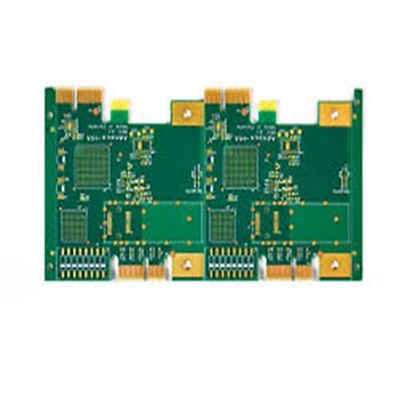
Now, if you’re a design engineer, a product manager for a consumer tech brand, or even a hobbyist building your own gadget at home, and you’re wondering if a multilayer FR4 board is right for your next project, hit me up. I’ve been doing this for 8 years, I’ve worked with everything from tiny wearables to big home appliances, and I can help you figure out how many layers you need, what thickness works, and how to keep your costs low without sacrificing quality. Don’t let the word “multilayer” scare you—it’s not just for big corporations or space rockets. It’s the quiet workhorse that makes your favorite gadgets actually work day in and day out. So next time you’re using your wireless charger or your smart watch, take a quick second to appreciate that green board inside—it’s probably a multilayer FR4 PCB, and it’s doing its job way better than you think.
Single Layer FR4 PCB Board References:
- Tummala, R. R. (2010). Fundamentals of Microsystems Packaging. McGraw-Hill Education.
2.IPC-2221, Generic Standard on Printed Board Design. Association Connecting Electronics Industries, 2018. - FR4 Material Data Sheet. DuPont Electronics & Communications, 2022.
- Consumer Electronics Reliability Testing Standards. Institute of Electrical and Electronics Engineers, 2021.
- PCB Cost Optimization for Low-Volume Consumer Electronics. Printed Circuit Design & Fab Magazine, 2023.
Fastline Circuits Co., Limited
Fastline Circuits Co., Limited is one of the most professional multilayer FR4 PCB board manufacturers and suppliers in China. With abundant experience, we warmly welcome you to wholesale durable multilayer FR4 PCB board made in China here and get quotation from our factory. All customized products are with high quality and competitive price.
Address: Room 301, Building B3, Fuqiao 4th District, Qiaotou Community, Fuhai Subdistrict, Bao’an District, Shenzhen, Guangdong Province, China
E-mail: sales@fastlinepcb.com
WebSite: https://www.fastlinepcb.net/
