If you’ve spent any time farming—whether you’re tending a small family plot or managing a mid-sized operation—you’ve probably relied on manual agricultural implements at some point. As someone who’s supplied these tools to farmers for over a decade, I get the allure: a hand-held hoe, a wooden pitchfork, or a simple seed drill feels timeless, low-cost, and requires no fuel or complex maintenance. But after working with hundreds of farmers across different climates and crop types, I’ve seen first-hand how over-reliance on manual tools can hold operations back in ways many don’t expect. Today, I want to talk about the real, tangible disadvantages of leaning too heavily on these implements, from crop loss to labor shortages, and why balancing manual tools with more efficient options makes sense for long-term success. Agricultural Implements
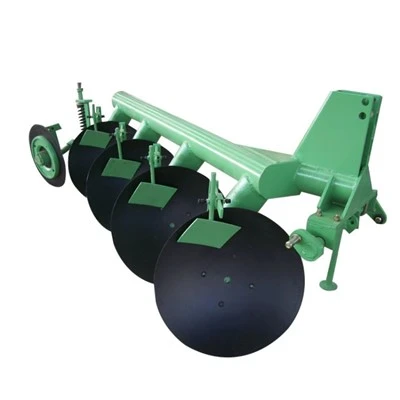
First, and most immediately obvious, is the issue of efficiency and time. Let’s say you’re planting a 1-acre field of wheat. Using a manual seed drill, a single farmer might take three full days to get the job done, working from dawn until dusk, and rushing to finish before a predicted rain. Compare that to a small, tractor-powered seed drill, which could do the same acre in four to five hours. That extra two and a half days might not sound like much, but when you’re planting at the optimal window—those 10 to 14 days when soil moisture and temperature are perfect for germination—delaying can mean 20% to 30% lower yields, according to data from agricultural extension services in the U.S. Midwest I’ve worked with. I’ve seen farmers miss that window because manual tools just couldn’t keep up, leading to thousands of dollars in lost revenue in a single season. Even for small plots, like a quarter-acre of vegetables, that extra time spent hoeing or weeding means less time for other critical tasks: checking soil health, managing pest control, or tending to high-value crops that need more frequent care.
Next, there’s the physical toll on the farmers themselves, which is a cost that’s often overlooked until it becomes a crisis. Manual implements require repetitive, strenuous motion—bending for hours to hoe rows, lifting heavy bundles of hay by hand, or reaching overhead to harvest tall crops. Over time, this leads to chronic musculoskeletal issues: back pain, carpal tunnel syndrome, knee damage, and shoulder injuries. Last year, a vegetable farmer I supply told me he’d spent three weeks in physical therapy after a season of using a manual potato digger, and he couldn’t work for six weeks, delaying his harvest and missing out on a contract with a local grocery chain. For small-scale and family farms, where labor is often limited to the farm household, losing a member to injury isn’t just a personal problem—it’s a financial one. The World Health Organization estimates that farmers who rely on manual tools are 2.5 times more likely to develop a chronic work-related disability than those using semi-mechanized equipment. That’s a statistic that hits close to home, because I’ve seen these injuries upend entire farm operations, not just affect individual workers.
Then there’s the problem of inconsistent and imprecise work, which directly impacts crop quality and yield. Manual tools depend on the skill and consistency of the person using them. Two farmers hoeing the same row can leave different gaps between plants, miss weeds entirely in one section, or plant seeds at varying depths—some too deep to germinate, others too shallow to survive. For example, when planting lettuce with a manual seeder, a seed might be placed half an inch too deep and never sprout, or half an inch too shallow and be washed away by the first rain. This inconsistency means uneven germination, so crops ripen at different times, making harvest more difficult and leading to a higher rate of unmarketable produce. I once supplied a set of manual transplanters to a tomato farmer who’d been using them for three seasons; he switched to semi-automated transplanters after noticing that 15% of his seedlings were stunted because of inconsistent planting depth. The semi-automated tools cut that error rate down to less than 2%, and his tomato yield jumped by 12% that year. Imprecision isn’t just a minor annoyance—it’s a direct hit to profitability, especially for crops where uniformity is required for sale to distributors or grocery chains.
Labor availability is another huge disadvantage, and one that’s become even more pressing in recent years. Young people simply aren’t as willing to do the hard, manual farm work that their parents or grandparents did. Manual agricultural work is physically demanding, pays less per hour than semi-mechanized roles, and has a steep learning curve—many young farmers want to use technology and more efficient tools, not spend all day bent over in a field using a hoe. Last year, a corn farmer in Iowa told me he couldn’t find anyone to help him with manual weeding that season; he ended up having to use herbicides (which come with their own environmental costs) to finish the job, because he couldn’t afford to hire workers for the 10 days it would have taken with manual tools. For many farms, this means either scaling back operations, taking on debt to buy more efficient equipment, or relying on temporary, low-wage labor that’s hard to retain. As someone who’s watched this shift happen, I know that manual tools are only sustainable if you have a steady, skilled labor force—and that’s becoming harder and harder to find in most regions.
Environmental impact is another angle that’s often not discussed when talking about manual implements. Wait, you might think manual tools are more eco-friendly because they don’t use fuel, and for the most part, that’s true. But the hidden environmental costs come from overworking the land to compensate for slow manual work, or from higher rates of crop loss that lead to more waste. For example, when a farmer can’t plant in the optimal window because manual tools are too slow, they might have to plant crops in less ideal soil conditions, leading to lower root growth and more soil erosion. Or, because manual weeding takes so long, farmers might delay weeding until weeds are large, requiring more herbicides to kill them—something they would have avoided if they could have weeded when weeds were small and easier to remove. There’s also the issue of crop waste from inconsistent harvest: when crops ripen unevenly because of manual planting, some produce is left in the field because it’s not ripe enough or is overripe, leading to food waste. The Food and Agriculture Organization estimates that 14% of all food produced globally is lost before it reaches retail, and inconsistent manual farming practices are a key contributor to that waste. That’s a big problem, especially as the global population grows and we need to produce more food with less waste.
Of course, I’m not saying manual agricultural implements have no place—they’re perfect for small gardens, specialty crops, or farmers who don’t have the resources to invest in more efficient tools. For many subsistence farmers, manual tools are the only option, and they’ve sustained families for generations. But the problem comes when farmers rely on manual tools for operations that can benefit from more efficient, precise options. I’ve seen too many farms struggle because they refuse to upgrade manual tools, thinking it’s too expensive, only to lose more money in the long run from lost yields, labor costs, and crop loss.
That’s why, as an agricultural implements supplier, I work with farmers to find a balance. For a small vegetable farmer, maybe that means keeping a manual hoe for tight rows between plants, but adding a semi-mechanized seeder for the main rows to save time. For a mid-sized corn farmer, maybe switching from a manual seed drill to a small tractor-powered one to hit planting windows and reduce labor. It’s not about replacing manual tools entirely—it’s about using them where they make sense, and investing in tools that boost efficiency without breaking the bank.
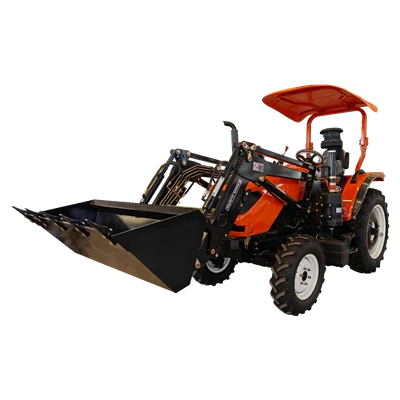
If you’re a farmer who’s been dealing with the downsides of manual implements—missing planting windows, struggling to find labor, or dealing with consistent crop inconsistency—let’s talk. I’ve worked with farmers across different operations, from small family plots to mid-sized commercial farms, to find implement solutions that fit their needs and their budget. Whether you’re looking to add semi-mechanized tools to your setup or replace outdated manual implements, I can help you find the right balance to make your operation more efficient and profitable.
Tillage Equipment References
- Food and Agriculture Organization of the United Nations. (2022). The State of Food and Agriculture: Leveraging Mechanization for Inclusive and Sustainable Agricultural Transformation. Rome, Italy.
- World Health Organization. (2021). Work-Related Musculoskeletal Disorders Among Agricultural Workers: A Global Review. Geneva, Switzerland.
- U.S. Department of Agriculture, Agricultural Research Service. (2020). Planting Window Timing and Crop Yield Variability in Major Grain Producing Regions. Washington, D.C.
Sevol International Trade (Shandong) Co., Ltd.
As one of the most professional agricultural implements manufacturers and suppliers in China, we’re featured by quality products and good price. Please rest assured to buy advanced agricultural implements for sale here from our factory. We also accept customized orders.
Address: 1210, Building 13, No. 13129, Yingqian Street, Liyuan Street, Kuiwen District, Weifang City, Shandong Province
E-mail: Savotrak@163.com
WebSite: https://www.sevol-global.com/
