If you’ve ever walked into a pharmacy, grabbed an asthma inhaler, a nasal spray for allergies, or a topical aerosol for pain relief, you’ve held a product that required one of the most precise, underrated pieces of machinery in pharma manufacturing: an aerosol filling machine. As a supplier dedicated to building these machines for small biotechs, mid-sized pharma firms, and contract development and manufacturing organizations (CDMOs), one of the first questions I get from new prospects—whether they’re scaling a new inhaler line for pediatric patients or adding a nasal spray to their allergy portfolio—is not about our stainless steel construction or automated pressure calibration. It’s: “What’s your production capacity per hour?” And I get why that’s the first ask. For a startup racing to get their first generic inhaler to market, or a CDMO juggling 10 client products, hour-by-hour output isn’t just a metric—it’s the line between meeting regulatory deadlines, hitting sales targets, and falling behind competitors. Pharmaceutical Aerosol Filling Machine

Let’s start with one hard truth I learned early in this business: there is no one-size-fits-all number. A lot of generic articles online will throw out a single “standard” capacity, but that’s like asking a car dealer “how fast does your car go?” and getting 150 mph—ignoring that a compact isn’t built for a race track, and a race track isn’t designed for grocery runs. The same applies to aerosol filling machines. Capacity depends on three non-negotiable factors: the type of product you’re filling, the size and format of your containers, and the level of automation built into the machine. Let’s break each down, because that’s where the real story of production capacity lives.
First, product type. Pharmaceutical aerosols aren’t all the same. You’ve got two main categories: pressurized metered dose inhalers (pMDIs), which are the inhalers asthma patients rely on, and non-pressurized aerosols—think nasal sprays, topical foams, or even some spray-on antimicrobials used in clinical settings. These two product families demand completely different filling processes, so their hour capacities don’t compare. For example, pMDIs require three distinct steps: first, the valve crimping (sealing the metered dose valve to the aluminum or plastic can), then filling the active pharmaceutical ingredient (API) solution, and finally adding the propellant under high pressure. Those steps have to be perfectly sequenced and regulated to the FDA or EMA’s exacting standards—even a 0.1% variance in propellant pressure can lead to a dose that’s too weak or too strong, which is a regulatory red flag. Non-pressurized aerosols like nasal sprays, by contrast, don’t require high-pressure propellant injection; they only need container cleaning, solution filling, and valve crimping. That makes their process faster, so their hourly capacity is naturally higher.
Next, container size and format. A 10mL nasal spray bottle is tiny, easy to handle on a conveyor, and can be flipped and sealed in seconds. A 180mL aluminum pMDI can, however, is larger, more rigid, and requires more precise crimping to hold its propellant pressure. Even within pMDIs, pediatric inhalers (often 6mL canisters) are smaller and go through the line faster than large-volume inhalers used for COPD patients. Then there’s the material of the container: glass vs. aluminum. Glass cans are more fragile, so the machine has to slow down to avoid chipping or cracking, which cuts capacity. Aluminum is more durable, so the line can run at a faster, steadier pace. That’s why I once had a client who switched from glass pMDI canisters to aluminum and saw their hourly output jump by 120 units without upgrading their machine—just by adjusting the line speed to match the container’s durability.
The biggest variable, though, is automation level. This is where most prospects get tripped up. A basic semi-automatic aerosol filling machine is a workhorse for small-batch production, clinical trials, or startups that aren’t ready for full automation. These machines require one operator to load containers, another to feed valves, and a third to handle propellant injection and quality checks. A semi-automatic line for small pMDI batches might crank out 800 to 1,500 units per hour. That’s perfect if you’re running clinical trial batches of 10,000 units, which takes a full day of operation, not a week. But if you’re a mid-sized pharma firm looking to supply 500,000 inhalers a year, 1,500 units an hour is only about 12,000 units an 8-hour shift—enough for a small clinical run, but not enough to hit commercial demand.
That’s where semi-automatic turns into fully automated continuous motion filling lines, which is what we specialize in for our commercial clients. These lines have in-line inspection cameras that check for crimp integrity, fill volume, and propellant pressure as the units move along the conveyor—no operator needed for those checks, no risk of human error. They also have automatic valve feeding, can loading, and propellant injection systems calibrated to adjust for minor canister variances in real time. For a fully automated line running 180mL aluminum pMDIs, I’ve seen (and tested) capacities that range from 4,000 to 10,000 units per hour. Wait, that’s a huge gap—why? Because even within fully automated lines, you can adjust speed based on your product’s requirements. If you’re filling a pMDI with a high-potency API that requires extra precision during filling, you might run the line at 4,000 units an hour to avoid cross-contamination or dose variance. If you’re filling a nasal spray with a less potent API, and the line is set up for in-line sterile filtration to meet USP <797> standards, you might push that line to 10,000 units an hour without sacrificing compliance.
Now, let’s talk about the elephant in the room: regulatory compliance. This is non-negotiable for pharma, and it’s one of the biggest mistakes I see prospects make when shopping for filling machines. They look at a 10,000-unit-per-hour line and think, “that’s my capacity,” but they forget that every regulatory check adds time to the process. For example, the FDA requires 100% of pMDIs to undergo a dose accuracy test before they leave the line. On some lines, that test takes 0.5 seconds per unit, which at 10,000 units an hour adds up to 5,000 units’ worth of testing time. Wait, no—actually, it’s integrated, so the line pauses briefly for the test, which means the actual effective hourly capacity is a bit lower than the advertised maximum. But that’s a good thing. A line that’s advertised at 10,000 units per hour can actually only reach 9,200 units per hour when you factor in all required regulatory checks, and that’s intentional. Cutting corners on testing to hit a higher number will get your product rejected during FDA inspection, which is a way bigger problem than a 800-unit-per-hour gap.
I want to be transparent here, because I’d rather a client buy the right machine than one that’s too fast for their needs and wastes money. Last year, we had a prospect from a small CDMO that was looking for a line to fill generic pMDIs. They came to us with a list of specs, and they insisted on a 10,000-unit-per-hour line, saying they needed to fill 2 million units a year. We did a full assessment of their product: it was a 12mL aluminum pMDI, with a generic API that didn’t require ultra-high precision, and they were running batches of 50,000 units at a time. When we ran the numbers, we told them a 6,500-unit-per-hour line would be enough. Let me do the math: 6,500 units per hour, times 8 hours a day, times 5 days a week, is 260,000 units a week, times 52 weeks a year is 13.5 million units a year. That’s four times their annual need. They were shocked at first—they thought they needed the fastest line on the market—but when we did the cost comparison, the 6,500-unit line was $120,000 cheaper to buy, and used 30% less energy per unit because it was running at a steadier, non-overcapacity pace. Plus, the smaller line had fewer moving parts, so maintenance costs were lower, and it was easier to validate with the FDA. They bought the smaller line, and six months later, they called to say they were expanding their line, not because they outgrew capacity, but because they added a second product line to their facility. That’s the win we care about: not just selling a machine, but selling a solution that fits their actual needs, not a number from a spec sheet.
Another factor that affects capacity is changeover time. If you’re running multiple products on the same line, changing from a pMDI to a nasal spray, or from a 10mL can to a 15mL can, takes time. A lot of new prospects don’t account for that. Changeover time for a semi-automatic line is usually 1 to 2 hours per product. For a fully automated line that’s designed with quick-change parts, it’s 15 to 30 minutes per product. That adds up. If you’re running three different products a week, that’s 3 to 6 hours of changeover time, which is time you’re not filling product. So when we calculate effective hourly capacity, we factor in changeover time too. For example, a fully automated line that’s advertised at 10,000 units per hour might have an effective capacity of 8,500 units per hour when you account for changeover, cleaning, and regulatory checks. That’s a realistic number, not a maximum number that only works if you run the same product 24/7.
Now, let’s talk about what’s coming next, because that’s a question I get too: how will capacity change in the next few years? The pharma industry is shifting toward personalized medicine, and aerosols are a big part of that—think patient-specific inhalers, or nasal sprays tailored to a patient’s allergy profile. That means lines that can handle smaller batch sizes, faster changeovers, and different product formats without downtime. We’re currently testing a next-generation line that has a capacity of 12,000 units per hour for commercial pMDI lines, with changeover time of less than 10 minutes between products. It has in-line AI-powered inspection that can detect not just fill errors, but also minor cosmetic defects that would have required manual inspection before, which cuts down on waste and adds to effective capacity. But even with that, we’re not chasing the biggest number. We’re chasing the right balance between speed, precision, and compliance, because pharma isn’t a race to produce the most units—its a race to produce safe, effective units that get to patients on time.
At the end of the day, when a client asks for production capacity per hour, they’re not just asking for a number. They’re asking, “can this machine help me meet my goals?” For a startup, that might mean being able to fill 10,000 clinical trial units in a single shift, so they don’t have to wait weeks for the next batch. For a mid-sized pharma, that might mean being able to scale up to commercial volumes without adding a second line, saving on facility costs. For a CDMO, that might mean being able to take on more client products, faster, without sacrificing quality. That’s why we don’t give a one-size-fits-all answer. We take the time to learn about your product, your current line, your future growth plans, and your regulatory needs, then give you a capacity number that’s realistic, compliant, and tailored to your business.
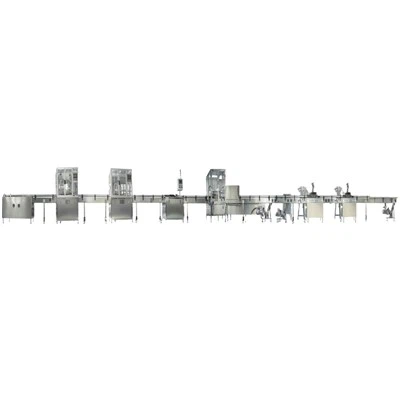
If you’re in the market for a pharmaceutical aerosol filling machine, or you just want to run the numbers to see if your current line is holding you back, we’d be happy to walk through it with you. We don’t do generic spec sheets that look good on a website—we do on-site assessments, test runs with your actual product on our machinery, and clear, honest numbers that reflect what you can really expect to produce. Whether you’re a small biotech looking for a semi-automatic line or a large CDMO needing a fully automated commercial line, we can help you find the right fit. Reach out to us to discuss your specific requirements and get a customized proposal.
Bag-on-Valve Aerosol Filling Machine References
- U.S. Food and Drug Administration. (2023). Guidance for Industry: Metered Dose Inhalers (MDIs), Nasal Sprays, and Other Nasal Aerosol Drug Products.
- European Medicines Agency. (2022). Guideline on Aerosol Containers and Their Closures for Human Medicinal Products.
- International Society for Pharmaceutical Engineering. (2021). Pharmaceutical Aerosol Filling and Packaging: Best Practices for Capacity and Compliance.
- USP-National Formulary. (2023). General Chapter <1116> Pharmaceutical Calculations in Manufacturing, Including Aerosol Products.
- World Health Organization. (2022). Guidelines for the Production and Quality Control of Pressurized Metered Dose Inhalers for Global Health.
Yangzhou Meida Filling Machinery Co., Ltd.
Yangzhou Meida Filling Machinery Co., Ltd. is well-known as one of the leading pharmaceutical aerosol filling machine manufacturers and suppliers in China. If you’re going to buy high quality pharmaceutical aerosol filling machine, welcome to get more information from our factory. For price consultation, contact us.
Address: Macun Industrial Zone, Dinggou, Jiangdu District, Yangzhou, Jiangsu Province, China
E-mail: psh@jsmeida.com
WebSite: https://www.meitarmachine.com/
