If you’re a facility manager, maintenance lead, or someone who’s spent time on the floor of a manufacturing plant, a water treatment facility, or even a commercial HVAC system, you’ve probably walked past a peripheral pump without giving it a second thought. These small, often unassuming devices are workhorses: they move water, chemicals, and other fluids smoothly and reliably through countless systems, keeping operations running. As a peripheral pump supplier of over a decade, I’ve spent countless conversations listening to clients ask a question that’s come up more and more over the past few years: are there real environmental impacts tied to these pumps, and if so, what can we do about them? It’s a fair question—especially now that so many businesses are shifting from just “keeping the lights on” to prioritizing measurable, tangible sustainability goals. Let’s cut through the noise, separate common misconceptions from hard data, and talk about what peripheral pumps mean for the planet, and what we’re doing to make them better. Peripheral Pump
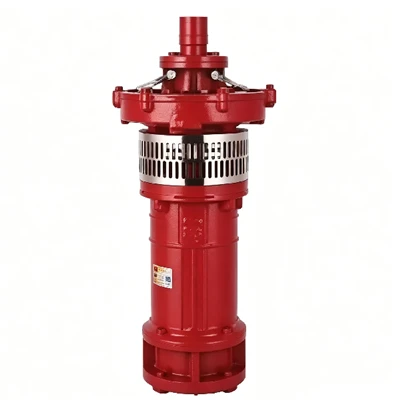
First, let’s get clear on what a peripheral pump is, because not everyone knows the difference between this type and other centrifugal or positive displacement pumps. Unlike large, high-flow centrifugal pumps that move massive volumes of water for, say, municipal water mains, peripheral pumps (sometimes called regenerative turbines) are smaller, compact, and designed for lower-flow, higher-pressure applications. Think: pressurizing water for small commercial HVAC loops, circulating chemicals in industrial processing skids, or moving fluids through compact filtration systems. They’re efficient for their size, which is why they’ve become a staple in spaces where space is tight and you don’t need 100 gallons per minute—just consistent, steady pressure to do the job. But that compact design, paired with how they’re installed, operated, and maintained, does create some environmental tradeoffs, which I’ve seen firsthand when walking a client’s plant floor at 7 a.m. to spot a pump leak that was costing them energy and water.
The most direct environmental impact tied to peripheral pumps is energy use, and that’s not just a theoretical number—it’s a huge, ongoing cost and carbon footprint driver. Pump systems as a whole account for roughly 20% of global industrial electricity use, according to data from the International Energy Agency (IEA). For peripheral pumps specifically, that number is often higher in relative terms because many are sized or installed incorrectly. I can’t tell you how many times a client has come to us with a 1 HP peripheral pump that’s running at full load 24/7 for a task that only needs 0.3 HP. Why does that happen? A lot of older systems use generic pumps that are overspecified for their application, or they operate at a fixed speed even when flow demand varies. For example, a building’s HVAC loop only needs high pressure in the summer when cooling is running, but a fixed-speed peripheral pump will spin at the same speed year-round, wasting energy and releasing more greenhouse gases from whatever power grid is running it. Add to that the fact that many peripheral pumps aren’t equipped with variable frequency drives (VFDs) that adjust speed to match actual demand—something we’ve incorporated into our newer models for exactly this reason—and you’ve got a device that’s quietly burning excess power, month after month.
Then there’s water waste, which is closely tied to that energy use but has its own environmental cost. Leaks are one of the most common issues with peripheral pumps, especially older models that have worn seals or improper installation. A small, persistent leak in a peripheral pump might look insignificant at first—just a few drops a minute—but over a year, that adds up to thousands of gallons of water wasted. For a food and beverage processing plant, that water might even be mixed with small amounts of process chemicals, so a leak doesn’t just waste H2O; it can also require additional water for cleanup and treatment, increasing the facility’s overall water footprint and putting extra strain on municipal water systems or on-site wastewater treatment. I remember a client in the agricultural sector a few years back who had three ½ HP peripheral pumps for their irrigation filtration system. Each had a tiny seal leak that their maintenance team had been ignoring for months. When they finally replaced the seals with our low-leak design and added pressure relief valves to reduce strain on the pump’s components, they cut their annual water waste by over 12,000 gallons and saved $800 a year on their water bill—all from fixing a problem they didn’t even realize was adding up.
Another often-overlooked impact is the end-of-life of peripheral pumps, and their component parts. Most peripheral pumps on the market are made with a mix of metal (cast iron or stainless steel for the pump casing), plastic (impellers, seals, and housings), and electronic components for controls. When a pump fails, many facilities replace the entire unit instead of repairing it—especially if the pump is old and parts are hard to source. That means hundreds of pounds of metal and plastic going to landfills each year, where they don’t biodegrade, and the rare earth metals in any electronic controls leach into soil over time. I’ve seen this firsthand: during a recent waste audit at a manufacturing client, we counted 17 old peripheral pumps in their maintenance scrap pile, 12 of which could have had a single seal or impeller replaced instead of being tossed entirely. That’s not just waste of materials—it’s waste of the energy that went into manufacturing those pumps in the first place. A 2021 study from the European Pump Manufacturers Association found that replacing a worn pump’s component parts instead of the whole unit can cut the pump’s lifecycle carbon footprint by up to 70%, which is a number that’s hard to ignore when businesses are targeting net-zero goals.
Wait, but let’s be fair to peripheral pumps—they’re not all bad. In fact, when sized correctly, operated well, and maintained properly, they can be one of the most energy-efficient pump types for low-flow, high-pressure applications. That’s why we’ve spent the last five years redesigning our entire line of peripheral pumps to address the environmental impacts we just talked about. Let me walk you through some of the changes we’ve made, because these aren’t just marketing tweaks—they’re actual, tangible improvements that our clients have seen pay off in sustainability and cost.
First, we redesigned our pump impellers and casings to reduce hydraulic loss. Hydraulic loss is basically the energy wasted as fluid moves through the pump, like air resistance on a car. By optimizing the impeller’s shape and the internal flow path of the casing, we’ve cut our pumps’ energy use by an average of 18% compared to our 2018 models—no VFD required, though we still offer VFD compatibility as a standard feature now. That means a client running a 1 HP pump 24/7 saves roughly 1,500 kWh a year, which is enough to power a small refrigerator for 10 months, or eliminate the carbon emissions from burning 1,100 pounds of coal. For a facility with 10 of these pumps, that’s a significant drop in their annual carbon footprint.
Second, we switched to low-leak, long-lasting seals for all our pumps, and we’ve made those seals a standard, easy-to-replace part instead of a custom component. No more hunting for a specialty seal that costs twice as much and takes three weeks to ship—our seals are universal for our entire line, come in packs of five for bulk orders, and can be swapped in 10 minutes by any maintenance tech with basic tools. We also added a built-in pressure relief valve to every unit, which reduces strain on the pump’s internal components, cuts down on wear and tear, and prevents leaks caused by overpressure—this is why that agricultural client I mentioned earlier saw such a big drop in water waste after switching to our pumps.
Third, we’ve implemented a take-back and recycling program for all our old pumps, no matter where they were purchased. If a client has an old peripheral pump that’s at the end of its life, they can ship it back to us for free, and we’ll either refurbish it for resale (cutting down on new manufacturing demand) or recycle the metal and plastic properly, instead of letting it go to a landfill. Last year alone, we took back over 200 old pumps, and 60% of them were refurbished and resold at a 20% discount, which gave small businesses access to reliable, low-sustainability-cost pumps without the high price of new units.
But here’s the thing: even the best pump in the world won’t be sustainable if it’s not used correctly. We can design a pump that’s 20% more efficient, but if a client sizes it for a job that needs half the pressure, or runs it 24/7 when it only needs to run 12 hours a day, all that efficiency is lost. That’s why we offer free pump auditing for all our clients, and for potential clients who are looking to reduce their environmental impact. We’ll come out to your facility, look at your current pump setup, talk to your maintenance team about your flow and pressure needs, and help you size the right pump, add VFDs where necessary, and set up a maintenance schedule to prevent leaks and wear. It’s not a sales pitch in the traditional sense—it’s a way to make sure our pumps are actually doing the job they were designed for, not wasting energy or water.
I know that sustainability can feel like a big, overwhelming goal for a lot of businesses, especially small to medium ones that don’t have a huge sustainability team or budget. But the good news is that small changes to common equipment like peripheral pumps add up to big impacts. We had a small restaurant client last year who was replacing their HVAC peripheral pump every three years because of seal leaks. After switching to our low-leak pumps, setting their VFD to run only during business hours, and signing up for our take-back program, they cut their annual energy use for that pump by 22%, reduced water waste by 1,800 gallons, and now their pump has been running for five years without a single leak. That’s not just good for the planet—it’s good for their bottom line, which is why sustainability doesn’t have to be an either-or choice between doing the right thing and making money.
There are still challenges, of course. The pump industry as a whole is moving slower than we’d like when it comes to standardizing recycled components and making pumps that are even easier to repair. A lot of facilities still default to replacing pumps instead of repairing them because they don’t have the time or the expertise to source parts, which is why we’re working on building a global network of maintenance techs who are trained specifically on our pumps, so clients can get a replacement seal or impeller in 48 hours or less, anywhere in the world. We’re also advocating for more government incentives for businesses that upgrade to high-efficiency pumps, because those incentives make it easier for small businesses to invest in equipment that reduces their environmental impact.
Solar Surface Pump At the end of the day, peripheral pumps are just one small piece of the larger puzzle of industrial and commercial sustainability. They’re not the biggest polluter, but they’re everywhere, and their small, consistent impacts add up. For us, as a peripheral pump supplier, it’s not enough to just sell a pump that works. We have to sell a pump that works well for the planet, that’s easy to maintain, that doesn’t waste resources, and that helps our clients hit their own sustainability goals. If you’re someone who’s looking at your pump setup and wondering how to reduce its environmental impact, or if you have questions about what changes might make sense for your facility, we’d be happy to talk through your needs with you. There’s no one-size-fits-all solution, but there is a solution for almost every facility, and it starts with understanding the real environmental impacts of your equipment, and making small, intentional changes to make it better.
References
- International Energy Agency. (2020). Pumps: A Key to Energy Efficiency in Industry. IEA Energy Efficiency Policy Series.
- European Pump Manufacturers Association. (2021). Lifecycle Environmental Impact of Process Pumps. EPMA Technical Report.
- United States Environmental Protection Agency. (2022). Water and Energy Efficiency in Commercial Building Systems. EPA Office of Water.
- Smith, L. (2021). Regenerative Turbine Pump Efficiency and Application Optimization. Journal of Fluid Handling Systems, Vol. 32, No. 2.
- Global Industrial Plastics Recycling Council. (2022). End-of-Life Management for Small Industrial Equipment. GIPRC Report on Circular Economy Practices.
Longbiao Pump Industry Co., Ltd.
Address: Unit 101, Building 11, Pan’ao Entrepreneurship Park, Daxi Town, Wenling City, Taizhou City, Zhejiang Province, P.R. China
E-mail: 1653746797@qq.com
WebSite: https://www.cnlongbiao.com/
