Pressure drop is a critical parameter in fluid systems, especially when dealing with cryogenic applications. As a supplier of cryogenic ball valves, I’ve witnessed firsthand the significance of understanding the pressure drop characteristics of these specialized valves. In this blog, we’ll delve into what pressure drop is, how it behaves in cryogenic ball valves, and why it matters for your operations. Cryogenic Ball Valve

Understanding Pressure Drop
Pressure drop, often denoted as ΔP, refers to the difference in pressure between two points in a fluid flow system. It occurs due to various factors that impede the smooth flow of the fluid, such as friction against the pipe walls, changes in flow direction, and restrictions in the flow path. In a valve, the pressure drop is the reduction in pressure from the inlet to the outlet as the fluid passes through the valve’s internal components.
Mathematically, pressure drop can be expressed as:
[ \Delta P = P_{in} – P_{out} ]
Where ( P_{in} ) is the inlet pressure and ( P_{out} ) is the outlet pressure.
Factors Affecting Pressure Drop in Cryogenic Ball Valves
1. Valve Design
The internal design of a cryogenic ball valve plays a significant role in determining the pressure drop. The size and shape of the valve’s bore, the type of ball (full port, reduced port), and the valve seat configuration all impact the flow path and, consequently, the pressure drop.
- Full Port vs. Reduced Port: A full port ball valve has a bore diameter that is the same as or very close to the pipe diameter. This design allows for a relatively unrestricted flow of fluid, resulting in a lower pressure drop. In contrast, a reduced port ball valve has a smaller bore diameter than the pipe, which creates a restriction in the flow path and leads to a higher pressure drop.
- Ball and Seat Configuration: The contact between the ball and the valve seat also affects pressure drop. A well-designed ball and seat combination with minimal leakage and smooth flow transition can help reduce pressure drop. For example, a floating ball valve with a tight – fitting seat can provide a more efficient seal and lower pressure drop compared to a valve with a loose or damaged seat.
2. Flow Rate
The flow rate of the cryogenic fluid through the valve is directly related to the pressure drop. According to the Bernoulli’s principle and the Darcy – Weisbach equation, as the flow rate increases, the velocity of the fluid increases. Higher fluid velocity results in greater frictional losses and turbulence within the valve, leading to an increase in pressure drop.
The relationship between flow rate (Q) and pressure drop (ΔP) can be approximated by the following equation for turbulent flow:
[ \Delta P \propto Q^{2} ]
This indicates that a small increase in flow rate can cause a significant increase in pressure drop.
3. Fluid Properties
The properties of the cryogenic fluid, such as density, viscosity, and temperature, also influence the pressure drop in a cryogenic ball valve.
- Density: Higher – density fluids generally experience a greater pressure drop compared to lower – density fluids at the same flow rate. This is because denser fluids have more mass, and more energy is required to move them through the valve.
- Viscosity: Viscous fluids have more resistance to flow, which leads to higher frictional losses and increased pressure drop. Cryogenic fluids like liquid nitrogen and liquid oxygen have different viscosities depending on their temperature and composition, and these variations can affect the pressure drop characteristics of the valve.
- Temperature: Temperature can have a significant impact on the properties of cryogenic fluids. As the temperature decreases, the density of the fluid typically increases, and the viscosity may also change. These temperature – related changes in fluid properties can cause variations in the pressure drop across the valve during operation.
Measuring Pressure Drop in Cryogenic Ball Valves
To accurately assess the pressure drop characteristics of a cryogenic ball valve, it is essential to measure the inlet and outlet pressures during operation. This can be done using pressure transducers installed at the inlet and outlet ports of the valve.
The pressure transducers convert the pressure into an electrical signal, which can be recorded and analyzed. By comparing the inlet and outlet pressures, the pressure drop can be calculated.
In addition to direct pressure measurement, computational fluid dynamics (CFD) simulations can also be used to predict the pressure drop in cryogenic ball valves. CFD models take into account the valve geometry, fluid properties, and flow conditions to simulate the fluid flow through the valve and calculate the pressure drop. These simulations can provide valuable insights into the flow behavior within the valve and help in optimizing the valve design to reduce pressure drop.
Importance of Understanding Pressure Drop in Cryogenic Applications
1. Energy Efficiency
In cryogenic systems, energy consumption is a major concern. A high pressure drop across a valve means that more energy is required to pump the cryogenic fluid through the system. By understanding and minimizing the pressure drop in cryogenic ball valves, operators can reduce the energy consumption of the system, leading to cost savings and improved overall efficiency.
2. System Performance
Excessive pressure drop can affect the performance of the entire cryogenic system. It can cause a decrease in the flow rate of the fluid, which may lead to insufficient cooling or improper operation of downstream equipment. By ensuring that the pressure drop in the ball valve is within acceptable limits, the system can operate at its designed capacity and performance level.
3. Equipment Lifespan
High pressure drop can also put additional stress on the valve and other components in the cryogenic system. This can lead to premature wear and tear, increased maintenance requirements, and a shorter lifespan for the equipment. By controlling the pressure drop, the reliability and longevity of the system can be improved.
Our Offer as a Cryogenic Ball Valve Supplier
As a supplier of cryogenic ball valves, we understand the importance of pressure drop characteristics in cryogenic applications. We offer a wide range of cryogenic ball valves designed to minimize pressure drop and optimize system performance.
Our valves are engineered with advanced design features, such as full – port ball configurations and precise ball – seat relationships, to ensure smooth and unrestricted fluid flow. We also use high – quality materials that are resistant to the extreme temperatures and conditions of cryogenic environments, ensuring long – term durability and reliable operation.
In addition to our standard valve offerings, we provide customized solutions to meet the specific requirements of our customers. Our team of experienced engineers can work with you to design and manufacture cryogenic ball valves that are tailored to your application, taking into account factors such as flow rate, pressure drop, and fluid properties.
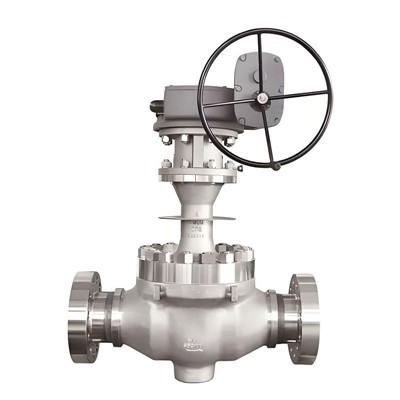
We are committed to providing the highest level of customer service. Our technical support team is available to assist you with any questions or concerns you may have about pressure drop, valve selection, or installation. We can also provide on – site training and support to ensure that your cryogenic ball valves are installed and operated correctly.
Ball Valve If you are in need of cryogenic ball valves for your application and want to learn more about their pressure drop characteristics, we invite you to contact us. Our team is ready to discuss your needs, provide detailed product information, and work with you to find the best solution for your cryogenic system. Whether you are a small – scale laboratory or a large – scale industrial facility, we have the expertise and products to meet your requirements. Engage with us to explore how our cryogenic ball valves can enhance the efficiency and performance of your operations.
References
- Munson, B. R., Young, D. F., & Okiishi, T. H. (2014). Fundamentals of Fluid Mechanics. Wiley.
- White, F. M. (2016). Fluid Mechanics. McGraw – Hill.
- Crane Company. (1988). Flow of Fluids Through Valves, Fittings, and Pipe. Technical Paper No. 410M.
Wuxi PYNOS Flow-tech Co., Ltd.
As one of the leading cryogenic ball valve manufacturers and suppliers in China, we offer a wide range of products with superior quality. We warmly welcome you to buy high quality cryogenic ball valve made in China here from our factory. We also accept customized orders.
Address: Sales Center: 7th Floor, No.19 Qingyuan RD, Wuxi City, Jiangsu Prov., China
E-mail: Info@pynosvalve.com
WebSite: https://www.pynosvalves.com/
